Beating UV Fade: Best Garage Door Colours for Logan Lake's Intense Sun
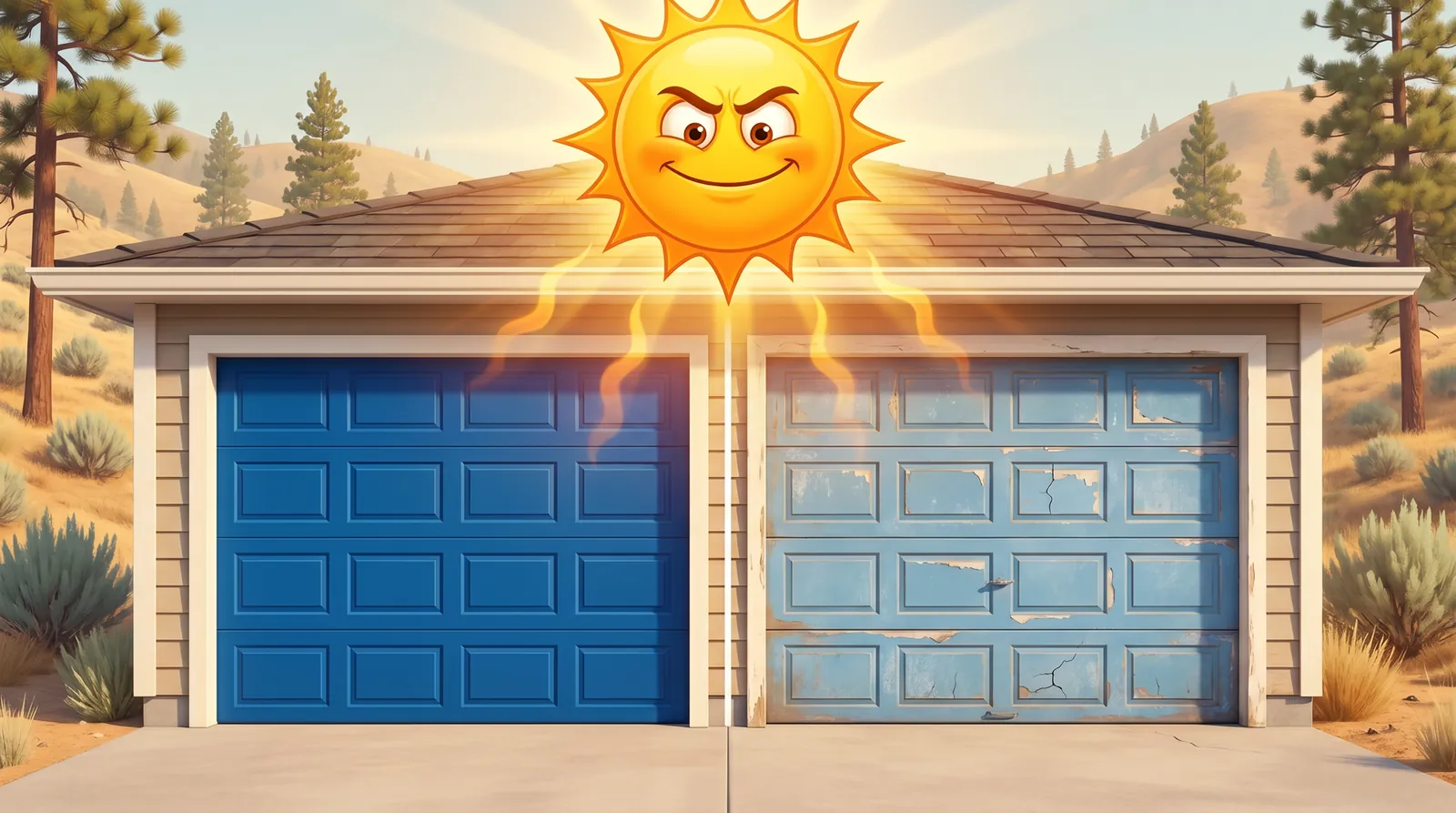
In Logan Lake, the sun does not just warm your garage door, it slowly bleaches it. The interior’s intense, high-elevation UV is harder on finishes than the milder, cloudier coast, and a colour that looks rich and deep on installation day can look tired and chalky years sooner than you would expect. Since the garage door is often a third or more of your home’s street-facing facade, that fade drags down the whole house. Choosing the right colour and finish from the start is the easiest way to keep your curb appeal looking fresh for years. Here is how.
The short answer: mid-tone, muted colours in a quality, UV-resistant finish hold up best in our sun, while very dark and highly saturated shades fade and heat-stress the soonest. Finish quality matters as much as the colour itself. Let us look at why our sun is so tough on doors and how to pick a colour that lasts.
Why interior-BC sun is brutal on finishes
UV light is what breaks down paint and finishes over time, fading the colour and eventually chalking the surface. The interior of BC gets more intense, less filtered sun than the coast, with clearer skies, higher elevation, and long, bright summers, so a door here absorbs a heavier dose of UV year after year. The same door would simply age more slowly under the cloudier coastal sky.
Heat compounds the problem. A door in full Logan Lake sun can get far hotter than the air temperature, especially in a dark colour, and that heat stresses the finish along with the UV. The combination of intense ultraviolet and high surface temperature is what fades and degrades a garage door finish faster here than almost anywhere milder. It is not your imagination if your last door looked sun-tired sooner than you hoped.
This is why colour and finish are not just cosmetic decisions in our climate, they are durability decisions. The right choice keeps the door looking good and reduces how often you need to refresh it, which ties directly into how much ongoing door painting and upkeep the door will need over its life.
Colours that hold up versus colours that fade
Not all colours weather equally. The general rule is that mid-tone, muted shades age most gracefully, because any fade that does occur is far less noticeable against them. Earthy browns and taupes, greys, greige, sage, and softer blues all tend to hold their look and hide weathering well. They also pair flexibly with most home colours, so they read as intentional now and forgiving later.
At the other end, the colours that show fade the soonest are the deep, saturated ones and the very dark shades. Rich reds and bold blues lose their punch as UV breaks down the pigment, and very dark colours both fade and absorb the most heat, which speeds up finish breakdown. They can look spectacular on day one, but in our sun they are the highest-maintenance choice, asking for a refresh sooner.
A few rules of thumb help here:
- Want the most forgiving colour: choose a mid-tone earthy or grey shade.
- Want low heat and low visible fade: lean lighter rather than darker.
- Love a bold or dark colour: go in knowing it will need refreshing sooner.
- Coordinate with the house body or trim so the door reads as intentional.
Comparison: how colour families weather here
It helps to see the trade-offs side by side. This table sums up how common colour choices tend to perform under intense interior sun.
| Colour family | Fade resistance | Heat absorption | Notes |
|---|---|---|---|
| Light (white, cream, light grey) | High | Low | Coolest, hides little dust though |
| Mid-tone (taupe, greige, sage, mid-grey) | High | Moderate | Best all-round; hides fade and dust |
| Dark (charcoal, deep brown, black) | Lower | High | Striking but runs hot, fades sooner |
| Saturated (red, bold blue) | Lowest | Moderate to high | Vivid now, loses punch fastest |
The pattern is clear: mid-tones are the sweet spot for our climate, balancing a good look, strong fade resistance, and moderate heat. Lighter colours run coolest and resist fade best but can show our constant dust more readily, while dark and saturated colours are the ones to choose only if you are willing to maintain them.
Finish quality matters more than the shade
Whichever colour you choose, the finish underneath it does much of the work. A baked-on factory finish, applied under controlled conditions and formulated for UV resistance, is generally the most durable starting point, which is one reason a new door with a quality factory finish often holds its colour longer than an older door that has been field-repainted. When you choose a new door during an installation, the finish quality is worth weighing alongside the colour.
If you are repainting an existing door rather than replacing it, the same principle applies: use a premium, UV-resistant exterior acrylic latex and do not cut corners on prep and primer, since adhesion and surface preparation determine how long the colour holds as much as the paint does. A cheap finish in a great colour will still fade fast, while a quality finish in a forgiving colour ages slowly and gracefully. Keeping that finish clean and cared for is part of routine maintenance on any door in our sun.
Picture two Logan Lake homes on the same sunny street. One has a mid-tone taupe door in a quality factory finish that still looks sharp after a decade; the other has a deep red door that has gone patchy and dull in half that time under the same sun. Same exposure, very different outcomes, decided by the colour and finish chosen up front. If you are picking a colour for a new door or a repaint and want it to last in our sun, for garage door painting in Logan Lake, call (778) 910-3106, or , and we will help you choose a colour and finish built for the interior-BC sun.
Frequently Asked Questions
What garage door colour fades the least in strong sun?
Mid-tone, muted colours generally fade the least visibly. Earthy tones, greys, taupes, and softer blues hold their look longer because any fade is less obvious against them. Very saturated reds and dark colours show fade and heat stress the soonest, so for the intense interior-BC sun a mid-tone in a quality finish is the safe choice.
Do dark garage doors get too hot in the interior?
They run noticeably hotter. A dark door in full Logan Lake sun absorbs far more heat than a light one, which raises the surface temperature, adds to thermal expansion, and can accelerate finish breakdown and fade. Dark doors look striking, but in our sun they trade some durability and heat performance for that look.
Does a factory finish resist fading better than repainting?
Usually yes. Factory finishes are baked-on under controlled conditions and are formulated for durability and UV resistance, so they typically outlast a field repaint. A quality repaint with proper prep and good exterior paint can still last years, but on a new door the factory finish is generally the more fade-resistant starting point.
How long before a garage door fades in interior-BC sun?
It depends on the colour, finish quality, and exposure, but our intense UV fades finishes faster than milder coastal sun. A quality factory finish in a forgiving colour can hold its look for many years, while a dark or low-quality finish on a sun-facing door can show visible fade in just a few. Good prep and good paint stretch that timeline.
Is there UV-resistant paint for garage doors?
Yes. Quality exterior acrylic latex paints are formulated to resist UV and fading, and choosing a premium, fade-resistant line makes a real difference in our sun. Pair it with proper prep and primer, since adhesion and surface prep matter as much as the paint itself for how long the colour lasts.
Should I match my garage door colour to my house or trim?
Both approaches work. Matching the door to the main body colour makes the garage recede and the house look larger, while matching the trim makes the door a deliberate accent. For curb appeal and fade resistance, a coordinated mid-tone tends to age best, looking intentional now and forgiving as the finish weathers.