Clearing Dust and Grit From Your Garage Door Tracks: A Kamloops Dry-Climate Guide
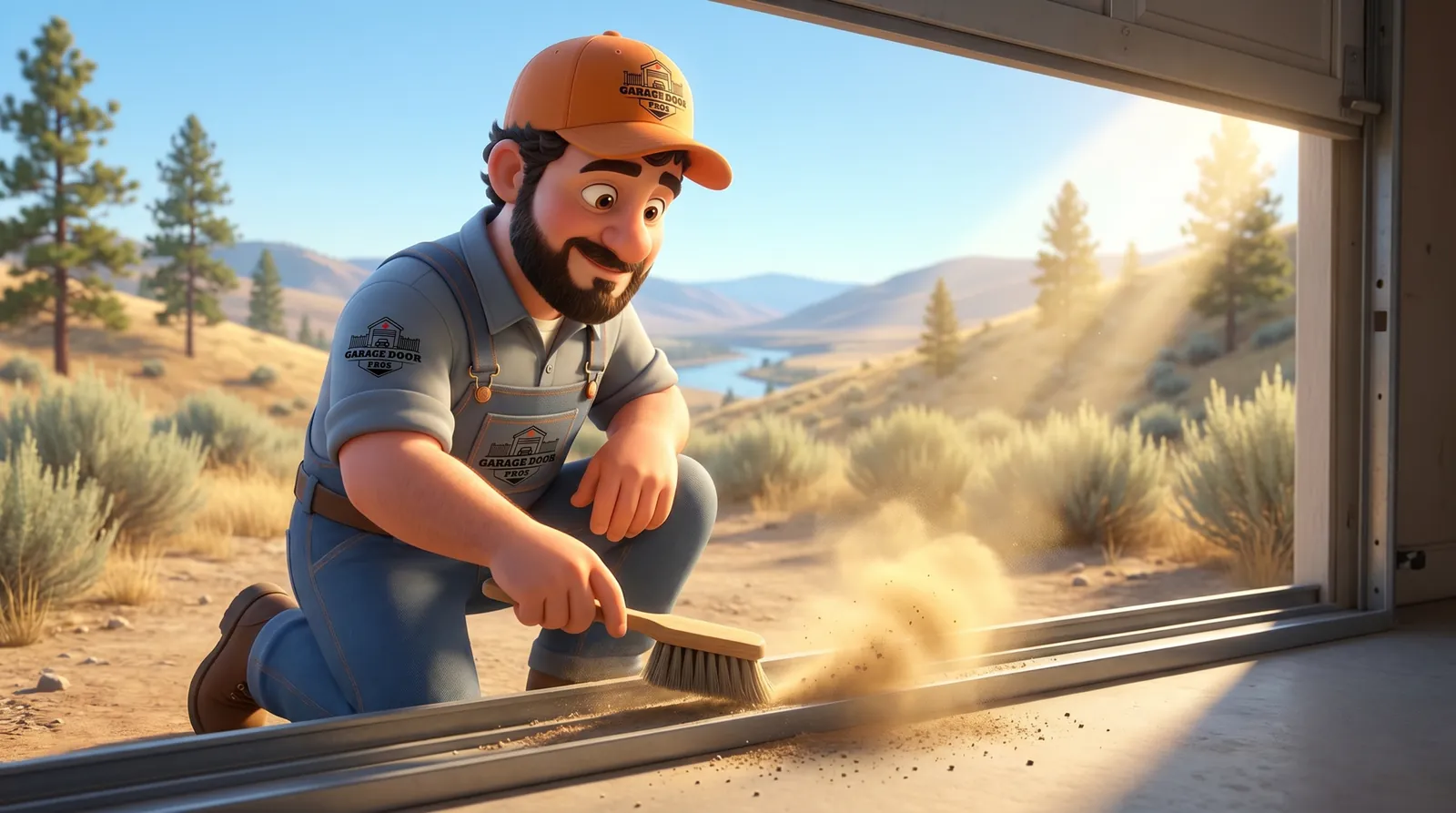
If you have lived in Kamloops for a summer, you know how much dust moves through the air here. That same fine grit settles into everything, including the one part of your home most people never think to clean: the garage door tracks. In our dry, dusty climate, that buildup is the quiet cause behind a door that grinds, sticks, and wears out its rollers years early. The fix is simple, cheap, and takes about fifteen minutes a season. Here is how to clean those tracks the right way.
The short answer, if you remember nothing else: clean the tracks, keep them dry, and never grease them. Greasing a track in a dusty climate is the single most common mistake we see, because it turns the channel into a grit magnet. Let us walk through why our valley air is so hard on tracks, and exactly how to clear them out without making the problem worse.
Why a dry, dusty climate is hard on your tracks
In a damp climate, the enemy is rust. In the Kamloops area, it is grit. Our dry air carries fine dust and sand that drifts into the garage every time the door opens, and it settles along the tracks where the rollers run. Over a season it builds into a gritty film that the rollers have to grind through every time the door moves up and down.
That grit does real damage, and the track is where it starts. As dust collects in the channel, it gets picked up and packed into the rollers that ride through it. Inside each roller is a small bearing, and once dust works its way in, it acts like sandpaper, wearing the bearing down until the wheel develops flat spots, wobbles, or seizes entirely. A seized roller drags in the track, which is what makes a door grind, run unevenly, and eventually bind. None of this happens overnight, which is exactly why it gets ignored until the door is noisy or sticking.
The good news is that dust is far easier to deal with than rust, as long as you stay ahead of it. A clean, dry track gives the rollers a smooth surface to run on and gives grit nowhere to collect. Keeping that channel clear is the single cheapest piece of garage door maintenance you can do, and it is the part this guide is all about. The trick is doing it the right way, because the wrong approach makes things worse.
How to clean your garage door tracks, step by step
Set aside about fifteen minutes. You will need a couple of cloths, a narrow brush or an old toothbrush, and a little mild degreaser for stubborn spots. Work with the door closed and the opener unplugged so it cannot start while your hands are near the tracks. There is no need to remove the tracks or take anything apart; this is a wipe-and-brush job from start to finish.
- Close the door fully and unplug the opener for safety.
- Wipe the inside faces of both vertical tracks with a dry or lightly damp cloth, working top to bottom.
- Use the brush or toothbrush to clear grit out of the inside corner of the track channel, where it tends to pack in.
- For caked-on buildup, wipe with a cloth dampened with a little mild degreaser, then go back over it with a dry cloth.
- Run the cloth along the curved section and the horizontal tracks overhead, as far as you can safely reach.
- Wipe the visible part of each roller stem and wheel to clear off surface grit before it gets carried back into the channel.
- Plug the opener back in and run the door a couple of times, listening for any remaining grind.
That is the whole job. The goal is simply a clean, dry channel for the rollers to run in. Notice that nowhere in those steps do you spray anything into the track itself, which brings us to the part people most often get wrong.
Why you must never grease the tracks
Here is the rule that matters most in our climate: the tracks stay dry, full stop. They are not a moving part. They are a guide rail, and the rollers are meant to roll along a clean, dry surface. Putting any grease or oil in the channel does not help the door at all; it only gives the dust something to stick to.
When you grease a track, especially in Kamloops, you create a sticky film that catches every bit of airborne dust the moment the door opens. Within weeks that film becomes a grinding paste of grease and grit that wears the rollers faster than no lubricant at all. It is one of those well-meaning shortcuts that quietly does the opposite of what you intended, which is why we flag it on nearly every dusty-climate service call. If a track has already been greased, wipe it back to bare, dry metal with a degreaser cloth before it does more harm.
Lubricant absolutely has its place on a garage door, just not in the track. The rollers, hinges, and springs are the parts that need a light coat to move quietly. That is a separate maintenance task with its own rules about which product to use and how often, and we cover it elsewhere; treat it as its own job, or let it ride along with a yearly professional tune-up. For the tracks, all you ever do is keep them clean and dry. Keep those two ideas apart and you will avoid the mistake that wrecks rollers across the Thompson valley.
How often to clean, and the signs grit has done damage
In the Kamloops area, aim to clean the tracks every two to three months, rather than the once-a-year advice written for milder places. Our dust simply loads the channel faster. Tying it to the change of seasons makes it easy to remember, and paying a little extra attention after a dry, windy stretch or a wildfire-smoke spell is smart, since both pile on extra grit. A clean track in spring will not stay clean through a dusty Thompson-Shuswap summer.
A few signs tell you the grit has already started to do harm:
- A door that grinds or scrapes as it moves, or runs more slowly than it used to.
- A door that hesitates or binds partway up, which often means a fouled track or a worn roller.
- A roller you can see wobbling, or one with visible flat spots, which has reached the end of its life.
- Streaks of black, gritty residue along the channel, a sign that old grease or packed dust is grinding away.
A wobbling or flat-spotted roller needs replacing before it drags the door off balance. Left long enough, a seized roller can pull a door off its track entirely, which turns a fifteen-minute clean into a real repair.
Regular cleaning handles the dust, but it does not replace a proper yearly check of the springs, cables, and balance, which are the high-tension parts you should leave to a technician. If your door is already grinding, sticking, or running rough despite a good cleaning, the rollers or hardware likely need hands-on repair. , call (778) 910-3106, or , and we will get your tracks clean, your door quiet, and the grit out for the long haul.
Frequently Asked Questions
Should I grease my garage door tracks?
No, and this is the single most common mistake we see. The tracks are a guide rail for the rollers, not a moving part that needs lubrication. Greasing them just collects the fine dust that drifts through Kamloops air, turning the channel into a grit magnet. Wipe the tracks clean and dry instead, and leave any lubricant for the rollers and hinges as a separate task.
How often should I clean my garage door tracks in a dusty climate?
Every two to three months is sensible in the Kamloops area, more often than the once-a-year advice written for milder, less dusty places. Our dry summers and dusty Thompson valley winds load tracks with grit faster, so a quick clean each season keeps the door rolling smoothly. Pay extra attention after a windy stretch or a smoky spell.
Why is my garage door grinding when it opens?
Grinding usually means grit has built up in the tracks, or a roller bearing has worn out from running through that grit. Cleaning the tracks and checking the rollers often fixes it. If a roller has flat spots or wobble, or the grinding continues after a thorough cleaning, the rollers likely need replacing.
What is the best way to remove grit from garage door tracks?
Wipe the inside of the tracks with a dry or lightly damp cloth, and use a narrow brush or an old toothbrush to reach into the corner of the channel where grit collects. For stubborn buildup, a cloth with a little mild degreaser works, followed by wiping fully dry. Never spray lubricant in the track, which only traps more dust.
Can dust really wear out my garage door rollers?
Yes. Grit that builds up in a dirty track acts like sandpaper inside a roller's bearing, grinding it down over time until the wheel develops flat spots or seizes. Dry, dusty conditions in the Thompson-Shuswap region speed this up, which is why keeping the tracks clean matters so much here. A clean channel is the cheapest way to make your rollers last.
Do I need professional maintenance if I clean the tracks myself?
Cleaning the tracks is great homeowner upkeep, but a yearly professional tune-up still pays off. A technician handles lubrication of the rollers, hinges, and springs, checks the cables and balance, and catches grit-related wear before it becomes a failure. The two together keep the door running for decades.