Commercial Garage Doors in Merritt: Choosing the Right Door for Your Shop or Warehouse
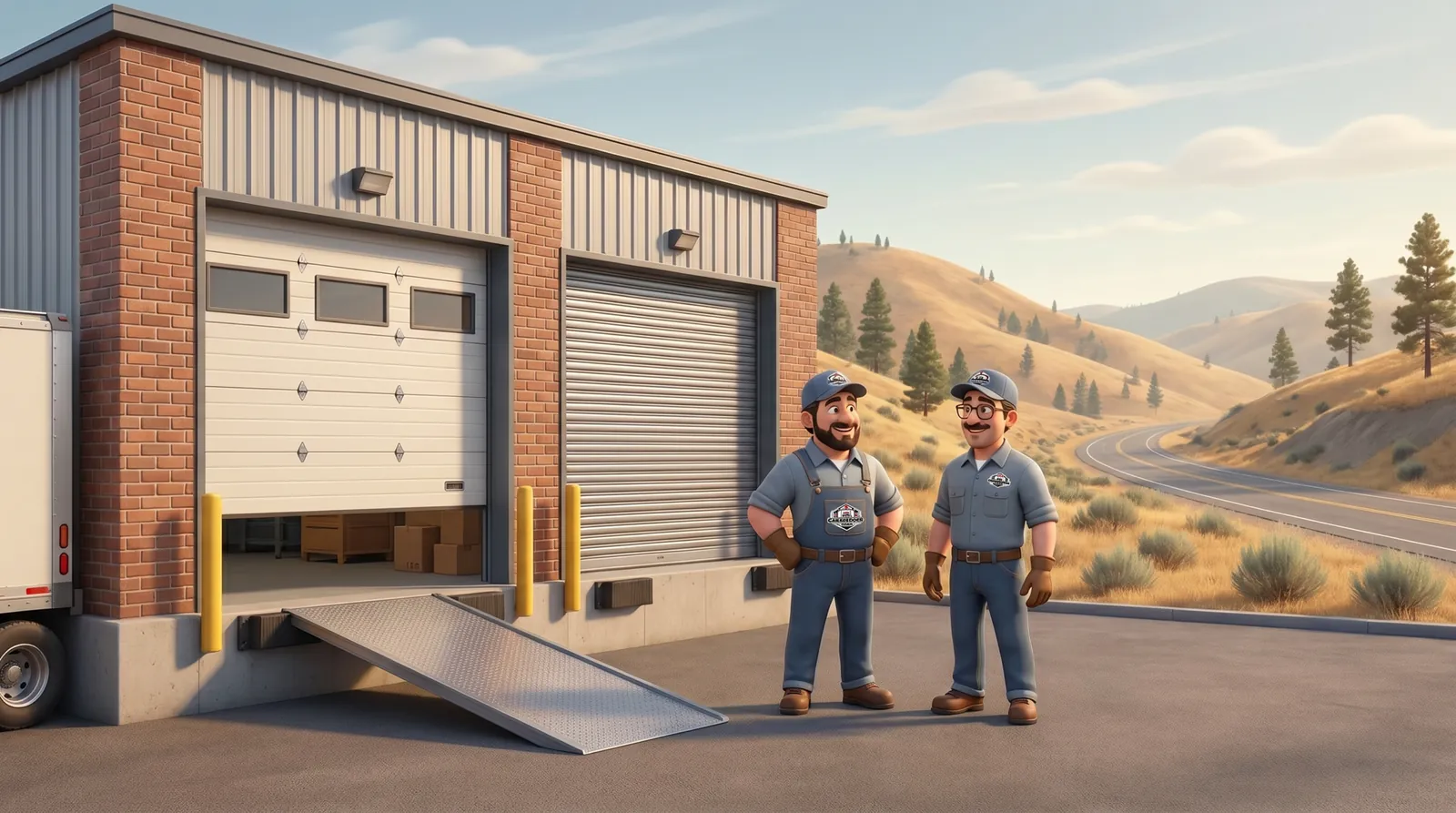
Along the Coquihalla corridor, a commercial garage door is part of how your business runs. It is the bay your trucks back into, the wall that holds heat over a logging or trucking yard’s shop, and the security barrier that locks down inventory overnight. For a Merritt shop or warehouse, picking the right door is less about looks and more about cycle life, security, insulation against the valley’s big temperature swing, and the cost of a bay that will not open when a load is waiting.
The short answer
For most Merritt businesses, an insulated sectional steel door is the dependable, do-everything choice for shops and warehouses that need to hold heat. Rolling steel doors win where you need hardened security or have tight headroom at a loading bay, high-speed doors pay off on busy bays where downtime and heat loss add up, and aluminum full-view doors suit showrooms. Match the door type to how the bay is actually used, then size the operator and insulation for the Nicola Valley climate.
The main commercial door types
Commercial doors are not one product. Each type solves a different problem, and the wrong choice shows up fast in your heating bill, your security, or your downtime.
- Insulated sectional steel: the warehouse and shop workhorse. Steel panels with a polyurethane or polystyrene core seal well, hold heat through the temperature swing, and take daily abuse. Best for heated buildings that need a tight, durable door.
- Rolling and coiling steel: a curtain of interlocking steel slats that rolls up into a compact barrel overhead. Ideal for tight headroom, loading docks, and openings where hardened security matters most.
- High-speed doors: open and close in seconds, limiting how long a busy bay stays exposed. Built for high-traffic bays where every minute open means lost heat, dust intrusion, or a forklift waiting.
- Aluminum full-view: glass panels in an aluminum frame for showrooms, dealerships, and customer-facing bays where you want light and visibility, not maximum insulation.
- Fire-rated doors: rated assemblies required by code in certain fire-separated openings, common in warehouse walls and shop separations.
If you are spec’ing a new building or replacing a worn bay, our team handles commercial garage door installation and will match the door type to the work the bay actually does.
What matters most for a commercial buyer
Once you know the door type, the buying decision comes down to a handful of factors that hit your bottom line.
| Factor | Why it matters in Merritt |
|---|---|
| Cycle life | A logging or trucking yard cycling a bay dozens of times a day needs heavy-duty springs and hardware rated for it. |
| Security | Steel gauge, locking, and rolling-curtain designs protect inventory along a busy highway corridor. |
| Insulation | A polyurethane-cored door holds heat from -20°C winters and resists 40°C-plus summer load. |
| Weather and dust sealing | Tight bottom and side seals keep corridor dust, wildfire smoke, and cold out of the building. |
| Clearance and headroom | Low-headroom tracks or rolling doors fit bays where a standard sectional will not. |
| Cost of downtime | A bay that will not open stops loads, so reliability and fast service beat a cheap door. |
Durability is the quiet headline here. A residential-grade door on a high-cycle commercial bay wears out fast, so spec the cycle rating to your real traffic. For security, heavier steel gauges and rolling-curtain designs make a difference along a corridor where after-hours theft is a genuine risk.
Insulation and sealing for the valley swing
Merritt and the Nicola Valley throw a wide range at a commercial door. Summer afternoons push past 40°C, winter nights drop to around -20°C, and dust and wildfire smoke ride the corridor in between. A single-skin steel door radiates that heat and cold straight through, which is brutal on a heated shop’s energy bill.
An insulated sectional door with a solid R-value and a proper thermal break keeps the building’s temperature where you set it. Just as important are the seals: a good bottom seal, side and header weatherstripping, and seals between panels keep grit and smoke out of the bay. For a building that is already costing too much to heat, retrofitting better panels and seals is often cheaper than you expect, and our garage door repair team can re-seal and tune an existing bay rather than replacing the whole door.
A Merritt example
Picture a trucking and equipment yard just off Highway 5 with a heated repair shop and two loading bays. The repair shop runs a single 14-foot insulated sectional door so the mechanics can work in winter without bleeding heat every time a truck pulls in. One loading bay has tight headroom against the roof structure, so a rolling steel door fits where a sectional’s tracks would not, and it locks the inventory down hard overnight.
The second bay is the busy one, with forklifts in and out all day moving freight. A high-speed door there cuts the seconds each cycle stays open, which keeps the corridor dust outside and the heat inside, and it shaves the wait time that adds up over a shift. Each bay runs a jackshaft or industrial operator sized for the door weight and cycle count, because a residential opener would burn out under that load. That mix of door types on one site is exactly how commercial buying works: the bay’s job picks the door.
Operators, downtime, and a service plan
Commercial doors lean on industrial operators, and the wrong one is a downtime machine. A jackshaft or wall-mount operator mounted beside the door clears overhead space and handles high-cycle duty, and sizing it to the actual door weight and traffic is what keeps it alive in dust and cold. On a heavy bay, the operator and the spring system are the parts working hardest.
The real cost of a commercial door is not the purchase price, it is the day a bay will not open while a load sits waiting. That is why a maintenance plan earns its keep: scheduled checks catch worn springs, cables, and rollers before they strand a bay, and keeping common wear parts on hand turns a lost day into a quick fix. A standing maintenance plan on your commercial doors is the cheapest insurance against the most expensive kind of downtime.
Making the call
Start with how each bay is used, not with a catalogue. Count the daily cycles, decide whether the space is heated, check the headroom, and weigh what an hour of a dead bay costs your operation. Then match door type, cycle rating, insulation, and operator to that reality, and put a service plan behind it so the door keeps earning.
When you are ready to spec doors for your shop, warehouse, or yard, , call (778) 910-3106, or . We handle commercial installation in Merritt, measure every bay, and lay out the door types that fit how your business actually runs.
Frequently Asked Questions
What type of commercial garage door is best for a Merritt warehouse?
For most Merritt warehouses, an insulated sectional steel door is the workhorse choice because it seals well against the valley temperature swing and stands up to daily use. If you need security and have tight headroom at a loading bay, a rolling steel door is often the better fit. The right pick depends on your bay size, cycle count, and whether you need to hold heat inside.
How much insulation do commercial doors need for the Nicola Valley climate?
Aim for an insulated sectional door with a solid R-value if you heat the building, since Merritt swings from 40°C-plus summers to roughly -20°C winters. A polyurethane-cored steel sandwich panel holds heat far better than a single-skin door and cuts your heating costs. Pair it with good bottom and side seals so dust and cold do not work their way in.
What is a high-speed door and is it worth it for a busy loading bay?
A high-speed door opens and closes much faster than a standard sectional, which limits how long the bay stays open. For a busy bay with constant forklift or truck traffic, that speed cuts heat loss, keeps dust out, and reduces wait time. It costs more up front, but on a high-cycle door the energy savings and reduced downtime often pay it back.
How long do commercial garage doors last in heavy industrial use?
Commercial doors are rated by cycle life, and heavy-use doors are built for far more open-close cycles than residential models. A logging or trucking yard that runs a bay dozens of times a day needs springs, hardware, and an operator rated for that load. With the right cycle rating and a maintenance plan, a commercial door lasts many years before major parts wear out.
Do I need a fire-rated door for my Merritt commercial building?
Fire-rated doors are required in certain openings between fire-separated areas, and your local building and fire code dictates where. They are common in warehouse walls, shop separations, and openings into mechanical or storage rooms. We can tell you whether an opening needs a rated assembly and supply one that meets the code requirement.
How much downtime does a broken commercial door cause and how do I avoid it?
A stuck commercial bay can halt loading, shipping, or production until it is fixed, which costs far more than the repair itself. The best defense is a scheduled maintenance plan that catches worn springs, cables, and rollers before they fail. Fast repair service and keeping common wear parts on hand also keep a down bay from stretching into a lost day.