Garage Door Frozen Shut? How to Free It Safely
The Short Answer
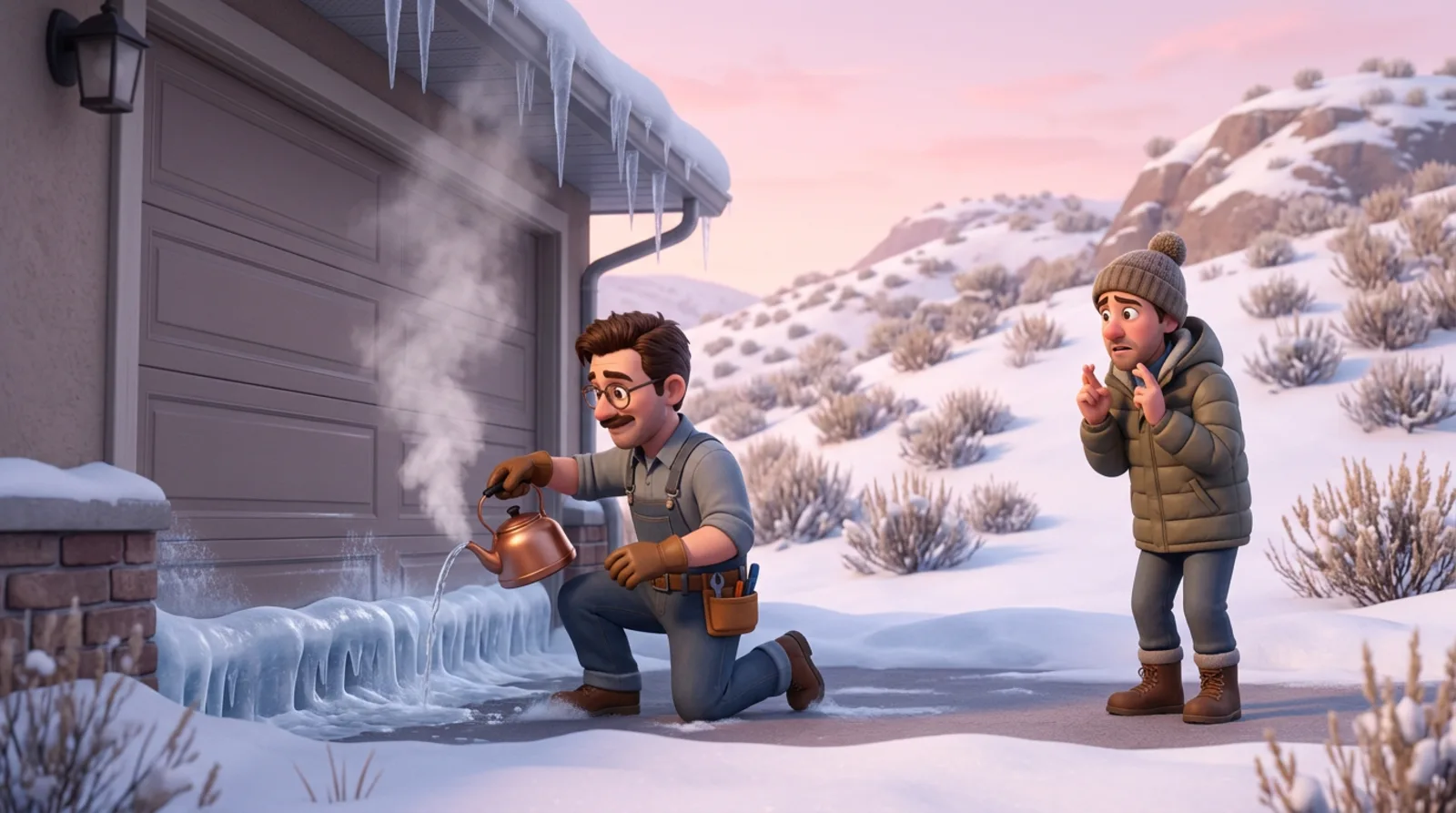
A garage door freezes shut when water collects along the bottom seal and freezes overnight, gluing the rubber to the concrete. To free it, stop running the opener, then loosen the seal gently with warm (not boiling) water, a hair dryer on low, or a plastic scraper, and dry the area afterwards so it doesn’t refreeze. Never force a frozen door with the opener: it can tear the seal, bend the bottom section, or damage the opener. To prevent it, keep the threshold clear, replace a worn bottom seal, consider a threshold seal, and give the seal a light silicone spray before cold snaps.
Why garage doors freeze shut
Three things combine on a cold morning:
- Water reaches the door. Snow melts off vehicles, slush gets pushed in, or runoff flows down a sloped driveway toward the garage.
- It pools along the seal. A flattened or cracked bottom seal, or a dip in the concrete, holds water right where the door sits.
- The temperature drops overnight. The water freezes and bonds the rubber seal to the floor.
Interior winters make this especially common: a sunny afternoon melts snow on the driveway, and a hard frost overnight locks the door down.
What not to do
- Don’t keep pressing the button. The opener may lift the door and tear the seal, or strain against it, stripping gears or tripping its force limit.
- Don’t pull the emergency release and yank. Forcing a frozen door by hand can bend the bottom section or damage the cables.
- Don’t chip at the seal with a metal tool. It is easy to cut the rubber or gouge the door.
- Don’t pour boiling water. It can damage the seal and the finish, and creates more water to refreeze.
How to free a frozen door safely
- Stop the opener. If it has already tried, unplug it or leave it alone while you work.
- Find the frozen spot. Usually it is the whole bottom edge, sometimes just a low spot where water pooled.
- Apply gentle heat. Pour warm tap water along the frozen edge, or use a hair dryer or a heat gun on its lowest setting, moving along the seal.
- Work the seal free. Slide a plastic putty knife or ice scraper carefully along the edge to break the bond.
- Dry the area. Mop or squeegee up the water and sweep away slush so it doesn’t refreeze in minutes.
- Test the door. Open it with the opener once the whole edge is free. If it still struggles, stop and check the springs.
A small amount of calcium chloride ice melt along the threshold can help on stubborn ice, but keep rock salt off the seal and the door bottom, and wipe up the residue later, since salt corrodes steel and concrete.
When it’s more than ice
If the seal is free and the door still won’t move, or it lifts a few centimetres and stops, the ice may not be the real problem. Cold mornings are also when springs break: look at the torsion spring above the door for a gap in the coil. If you see one, leave the door closed. Cold also stiffens lubricant, which can trip the opener’s force limit on a slightly unbalanced door. Our guide to keeping your garage door moving through a cold snap covers the winter checks.
If you can’t get the door open and you need the car
If the ice won’t release and you need to leave, don’t keep forcing the door. Make sure the springs are intact first. If they are, pulling the emergency release and lifting the door gently by hand once the seal is mostly free puts less strain on everything than the opener does. If the door is very heavy, or a spring looks broken, leave it closed and call for help; a frozen door with a broken spring is not one to lift by hand. Reconnect the opener once the door is free and the threshold is dry.
How to prevent it
| Prevention step | Why it helps |
|---|---|
| Clear snow and slush from the threshold daily | No water, no ice bond |
| Replace a cracked or flattened bottom seal | A healthy seal sheds water instead of trapping it |
| Add a threshold seal to the floor | Blocks runoff and fills dips in the concrete |
| Wipe silicone spray along the bottom seal | Ice struggles to bond to a treated seal |
| Fix driveway drainage | Stops water flowing toward the door |
| Park wet vehicles further in | Meltwater drips away from the door line |
A healthy seal and a dry threshold prevent most freeze-ups. Our guide to weather-sealing your garage door before the first frost walks through checking and replacing the seals.
Frozen doors in Salmon Arm
Salmon Arm’s winters bring heavy snow, freeze-thaw cycles, and moisture from the Shuswap, which is exactly the combination that freezes doors to the floor. Sunny afternoons melt snow on south-facing driveways, the water runs to the garage, and a hard frost locks it in place by morning. Garages at the bottom of sloped driveways see it most.
A fall check before the first freeze makes a big difference: a new bottom seal if the old one is tired, a threshold seal where water collects, and fresh cold-rated lubricant. Garage door winterization in Salmon Arm covers all of it, and if a door is frozen or stuck with a vehicle inside, Midnight Rescue in Salmon Arm is available around the clock.
Get ready before the freeze
Want your door ready before the first cold snap? , call (778) 910-3106, or . A technician will check the seals, springs, and opener so your door opens on the coldest mornings.
Frequently Asked Questions
Why is my garage door frozen shut?
Water from melting snow, rain, or slush runs under the door and collects along the bottom seal. When the temperature drops overnight, it freezes and bonds the rubber seal to the concrete. A worn seal, an uneven floor, or a driveway that slopes toward the garage makes it more likely.
How do I unfreeze my garage door?
Disconnect the opener or stop pressing the button, then free the seal gently: pour warm (not boiling) water along the frozen edge, use a hair dryer or heat gun on low, or carefully work a plastic scraper along the seal. Once it is free, dry the area so it does not refreeze.
Should I use the opener to force a frozen garage door open?
No. The opener can tear the bottom seal, strain or strip its gears, bend the door's bottom section, or stretch the cables. Many openers will simply reverse, but repeated attempts do damage. Free the seal first.
Can I use salt or de-icer to unfreeze a garage door?
A small amount of calcium chloride ice melt along the threshold can help, but avoid rock salt on the seal itself and wipe up the residue afterwards. Salt can corrode the steel bottom of the door, the track ends, and the concrete over time.
How do I stop my garage door from freezing to the ground?
Keep the threshold clear of snow and slush, replace a worn or flattened bottom seal, add a threshold seal to the floor if water pools there, and wipe a silicone spray along the bottom seal before a cold snap so ice cannot bond as easily.
What if my garage door still won't open after the ice is gone?
If the seal is free and the door still won't open, the cause may be a broken spring (common on cold mornings), a cable problem, or an opener issue. Look for a gap in the spring above the door, and if you see one, leave the door closed and call for repair.