Why Your Chase Garage Door Opener Struggles in Summer Heat
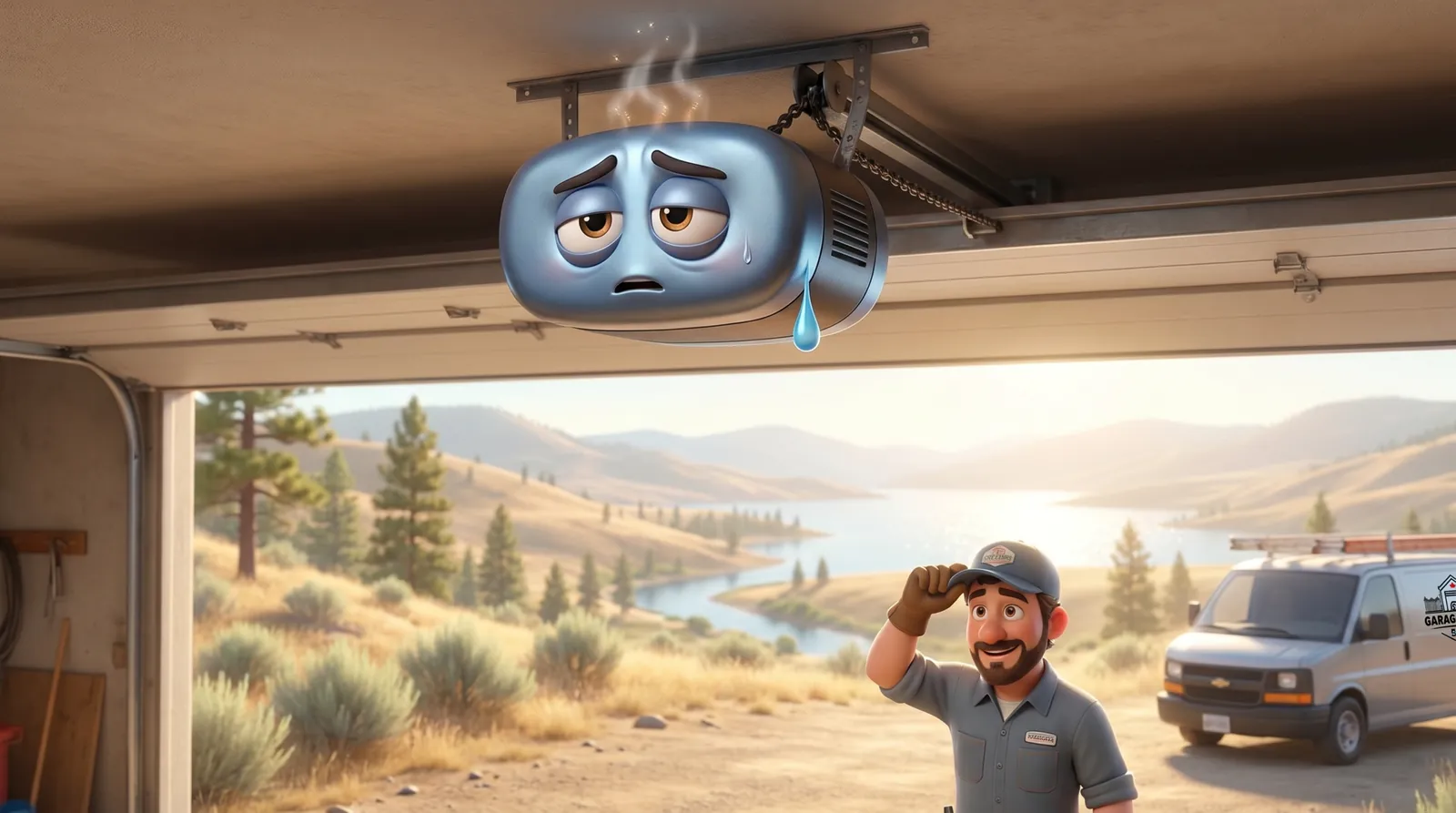
Inside a closed garage in Chase, a summer afternoon can push the temperature well past what the thermometer reads outside, often into the mid-40s. Your garage door opener lives up there near the ceiling, where the heat collects and is at its worst, and the motor head feels every degree. So when an opener that ran perfectly all spring starts straining, stalling, or quitting partway through a cycle once the heat arrives, the weather is usually the reason. Here is what extreme summer heat actually does to the opener motor and the hardware around it, and what genuinely helps.
The short version: heat makes the motor and its electronics work harder and age faster, thins the grease on the rail, and nudges the opener’s own settings out of their comfortable range. Most heat-season opener trouble is not a dead unit. It is heat exposing the limits of an overworked or aging one. If your door reverses specifically when low sun hits the floor sensors, that is a separate sensor-glare issue covered in its own article; everything below is about the opener itself.
Thermal overload: why the motor stalls mid-cycle
The most common heat complaint is an opener that stops partway, refuses to run for a while, then works fine once the evening cools off. That is the motor’s thermal-overload protection doing its job. Every opener motor has a built-in cutoff that shuts it down when its windings get too hot, so it does not cook itself. In a garage already sitting at 45 degrees, the motor starts hot and has almost no headroom left, so a single demanding cycle, like lifting a heavy insulated door, can push it over the line.
When that cutoff trips, the motor stalls where it is and will not respond again until it has cooled. People often read that as the opener dying, when really it is protecting itself. The fixes are about giving it headroom: lowering the garage temperature, reducing the load on the motor, and letting a tripped unit sit and cool rather than hammering the button. An opener that trips repeatedly on hot days, though, is telling you it is marginal, and that is worth addressing before it leaves a car trapped inside.
What heat does to the rest of the opener hardware
The motor is only part of the story. Sustained heat works on every component in the unit:
- Logic board and electronics. Circuit boards and solder joints run hotter near a baking ceiling, and heat is the enemy of electronics. An opener that cooks every summer ages its control board faster and is more likely to glitch or fail outright during a heat wave.
- The capacitor. The starting capacitor that gives the motor its initial kick degrades faster in heat. A weak capacitor shows up as a motor that hums, struggles to start, or starts slowly, and hot summers accelerate that decline.
- Rail grease. The lubricant on the rail that the trolley rides along thins out in extreme heat, then bakes and turns gummy. Thinned or gummed grease means more friction and a jerkier, noisier travel, which makes the motor work harder still.
- Force and sensitivity settings. Openers have force and travel settings that decide how much resistance counts as an obstruction. Heat changes the friction in the rail and the door’s hardware, so a setting that was fine in spring can drift into nuisance territory, causing the door to stop or strain.
- Capacitor-and-motor age generally. A unit that was already older or borderline simply shows its limits in the heat. Components that had a little life left in spring give it up on a 40-degree afternoon.
A properly balanced door takes a lot of this strain off the motor, because the springs do most of the lifting and the garage door opener only guides the door. An opener fighting an unbalanced or binding door is the one most likely to overheat, trip its overload, and age its board and capacitor prematurely. Keeping the door balanced and the rail properly lubricated is the cheapest protection you can give the motor in the heat.
What actually helps: cool the garage and lighten the load
If your opener cooks every summer, a few things genuinely reduce the strain, roughly in order of how much they help:
- Insulate the garage and the door. An insulated, lighter-coloured door reflects rather than soaks up the sun and keeps the interior temperature far more stable. A light colour alone keeps the door skin and the air behind it noticeably cooler on a clear Chase afternoon.
- Insulate the attic and garage shell. Heat radiating down from an uninsulated attic is a big part of why the ceiling, and the opener bolted to it, gets so hot. Insulating overhead keeps the worst of it out.
- Ventilate. Anything that lets the hottest air escape near the ceiling, where the opener sits, lowers the temperature it has to endure. Even a vent or a fan moving trapped heat makes a difference on a 40-degree day.
- Keep the door balanced and the rail lubricated. This stops the motor from working harder than it has to and keeps the rail grease from being the bottleneck.
- Let a stalled motor cool. If the overload has tripped, give it ten or fifteen minutes rather than forcing it.
Insulation is the bigger lever of the bunch. Keeping the garage cooler with good garage and door insulation is one of the most effective long-term protections for an opener here, and it pays off in our climate’s big temperature swings year-round, not just in the summer dust and heat.
When to upgrade the opener itself
Sometimes the real fix is the unit. Older AC-motor openers run hotter and have less tolerance for heat than modern DC-motor units. A current DC opener runs cooler and quieter, handles a hot garage far better, soft-starts and soft-stops to reduce strain, and usually includes battery backup, which is genuinely useful here when wildfire-season power outages knock the grid out and you still need to get the door open.
If your opener is old, underpowered, or already tripping its overload on the hottest afternoons, a hot summer is often what finally exposes it, and a cooler-running replacement makes more sense than nursing the old one through another season. Picture a Chase homeowner whose fifteen-year-old opener groans and stalls on the worst afternoons, then runs fine once things cool. The heat is not the whole story there; it is exposing an aging motor, a tired capacitor, and possibly a door that needs rebalancing. Catching that before the unit quits entirely, on a 40-degree day with a car trapped inside, is the difference between a planned upgrade and an emergency.
If your opener is straining, stalling, or shutting down in the heat and the basics have not solved it, we can pinpoint whether it is the motor, the rail, the settings, or the door, and tell you honestly whether it needs service or replacement. for opener service in Chase, call (778) 910-3106, or , and we will get your door opening reliably even on the hottest days, or handle any repair the heat has brought to light.
Frequently Asked Questions
Can heat damage a garage door opener?
Extended high heat can stress an opener. Inside a closed Chase garage, summer temperatures can climb well past the outdoor reading, and that heat makes the motor work harder, especially if the door is heavy or poorly balanced. Heat alone rarely kills a healthy opener outright, but it accelerates wear and pushes a marginal or aging unit toward failure.
Why does my opener stop partway and then work later?
That is almost always thermal-overload protection. When the motor gets too hot, a built-in cutoff stalls it mid-cycle to prevent damage, and it will not run again until it cools down. On a 40-degree Chase afternoon a marginal or overworked motor can trip this repeatedly, then run fine once the garage cools in the evening.
Does a hot garage shorten an opener's lifespan?
It can. Heat is hard on motors, logic boards, and capacitors over time, so an opener that regularly bakes near a hot Chase ceiling may not last as long as one in a cooler, insulated space. Improving ventilation, insulating the garage, and keeping the door balanced so the motor is not overworked all help an opener live longer here.
Should I get battery backup if my garage gets very hot?
Battery backup is worth having, especially for wildfire-season power outages, but extreme heat does shorten battery life, so a backup battery in a hot garage will need replacing more often. That is not a reason to skip it, just to keep an eye on it. Many modern openers warn you when the battery is weakening so you can replace it before it lets you down.
Is a belt or chain opener better for a hot garage?
The bigger factor than belt versus chain is the drive type and motor quality. Modern DC openers run cooler and handle heat better than older AC units, and belt drives run quieter with less vibration in an attached garage. Choose based on noise, budget, and how hard the unit will have to work, and make sure it is sized for your door's weight.
When should I call a professional about an opener struggling in the heat?
Call if the opener strains, stalls, overheats and stops repeatedly, or has drifted on its force settings. Those point to an overworked motor, gummy rail grease, an aging board, or a balance problem. A technician can confirm whether the heat is exposing an existing fault or the opener itself is reaching the end of its life, and recommend service or a cooler-running replacement.