Merritt Garage Door Dragging in the Heat? Why It Binds When the Thermometer Climbs
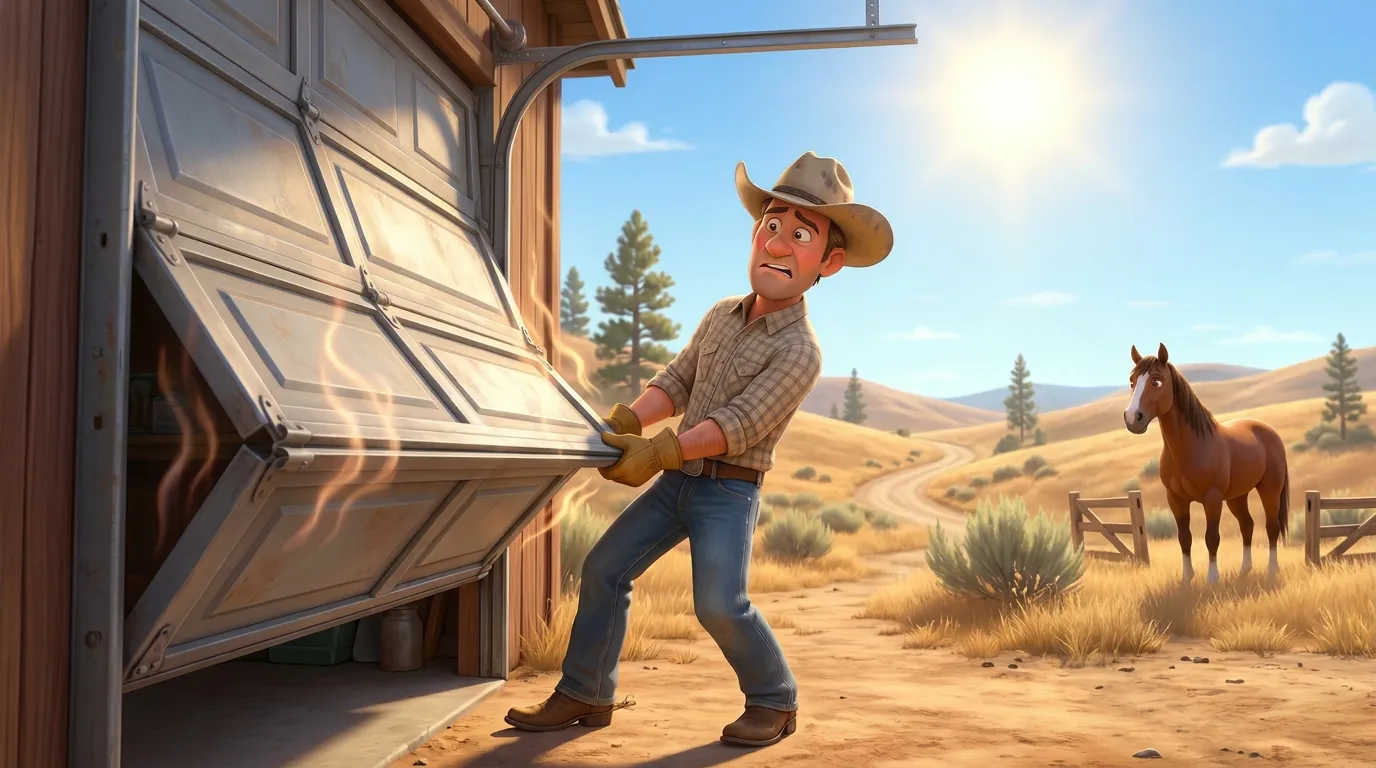
There is a moment every Merritt summer when the first proper heat wave settles over the Nicola Valley, the thermometer pushes into the high 30s, and a garage door that behaved perfectly all spring suddenly starts to drag, catch, and groan its way up the tracks. It is one of the most common warm-weather calls we take across ranch country, and the reason is almost always the heat itself working on a door that was already running a little close to its limit. Here is what is going on under that hot metal and what actually puts it right.
Short answer: heat makes the door’s metal expand, and a door with dry rollers, grit-packed tracks, or slightly worn hardware loses just enough clearance to start binding. Most of the time the cure is a clean and a light lubrication of the moving parts, not a major repair. But a door that drags hard, or keeps dragging after you have lubricated it, is pointing at something deeper that deserves a look. Let us walk through it.
What heat actually does to the door
A garage door is a large stack of metal parts, and metal grows as it warms. The panels, the tracks, the rollers, the hinges, and the brackets each gain a tiny bit of size in the summer sun, and on a door built with snug tolerances or carrying some existing wear, that small swell is all it takes to turn an easy glide into a drag. A door cycling in 40-degree heat is simply working with less room than the same door did at a cool spring 12.
The sun sharpens the effect. A panel facing the long Nicola Valley afternoon, particularly if it is dark or uninsulated, can run far hotter than the air around it, so it expands more than the rest of the door. That uneven swelling is why a door can run cleanly in the cool of the morning and then start catching as the heat builds toward late afternoon. When the dragging tracks the heat of the day like that, the heat is almost certainly your culprit.
None of this means the door is failing. It means the door is operating right at the edge of its tolerances and the heat has nudged it past. The job is to hand those moving parts back the smoothness and clearance they need, which is exactly what a round of garage door maintenance is built to do. In a hot, dry place like Merritt, that upkeep matters more than the once-a-year reminders written for milder, wetter towns.
What you can check yourself, and what to leave alone
A good share of summer dragging sits squarely in homeowner territory. Start at the tracks and rollers, because heat plus our dry-country dust is a classic pairing. Wipe the dust and grit out of the tracks, then lay a proper garage-door silicone spray or white lithium grease onto the rollers, hinges, springs, and bearings. Run the door up and down a few times and watch whether the binding eases. A surprising amount of heat-season dragging clears up right here, once the dried, gritty hardware is clean and slick again.
Here is the safe way to split the work on a dragging door:
- Fine to do yourself: wipe the tracks clean of dust, lubricate the rollers, hinges, springs, and bearings, and check for rollers that look worn or wobble as the door moves.
- Leave for a technician: anything touching the springs or cables under tension, and straightening a track that has bent or shifted.
- Never do: force a door that is catching, since that is what bends tracks, pops rollers, and strains the opener.
If a thorough clean and lubrication does not settle it, look a little closer but stay well clear of the high-tension parts. Watch for a roller with a visible flat spot or wobble, a track that has shifted or dented, or binding that lands at the same point in the travel every time, which usually signals an alignment problem. What you should not touch is anything bolted to the springs or cables. Those hold enormous force, and they mark the exact line where homeowner work ends and our work begins.
The one rule that runs through all of it: do not force a door that is dragging. Pushing through the catch can bend a track, knock a roller loose, strain the opener motor, or stress a cable, turning a five-minute job into a real repair. The instant you find yourself leaning into a door that will not glide, back off, because that is the moment a minor fix tips over into garage door repair.
Dust and heat: the pairing that seizes rollers
Merritt summers add a second ingredient that coastal climates never deal with, and that is dust. Hot, dry, windy stretches pack the tracks and roller bearings with fine grit, and grit on its own slowly grinds those bearings down. Add summer heat, which thins whatever dried lubricant is left, and you get rollers that drag, squeal, and eventually seize. In this valley that combination is one of the leading reasons doors start sticking in the warm months.
That is why the cleaning step carries so much weight here. A roller rolling through gritty, lubricant-starved tracks in the heat wears far faster than one in a clean, well-lubricated door. Keeping the tracks wiped down and the rollers lightly oiled pulls the grit-and-heat pairing apart before it can do harm, and it is the single most effective habit for stopping summer dragging from returning a few weeks later.
When a roller has already worn out, it usually shows itself: a flat spot you can see, a wobble as the door travels, or a steady grind that no amount of cleaning quiets. At that stage the roller needs replacing. It is a quick swap on its own, but an important one, because a seized roller dragging in its channel can eventually haul the whole door off its track if it is left to grind.
When the dragging means something bigger
Most summer sticking is minor, but a portion of it is a warning. If the door binds hard, drags unevenly so one side trails the other, or grinds loudly even after a careful clean and lubrication, the cause has moved past simple heat expansion. Worn rollers, a bent or misaligned track, loose hardware, or balance that has drifted out can all make a door catch, and the heat just brings the underlying fault to the surface where you finally notice it.
Picture a common Merritt scenario. A homeowner with a nine-year-old door that has skipped a tune-up or two notices it catching every hot afternoon out on an acreage past the river flats. They clean and lubricate it, it improves, but it still binds at the same spot near the top of its travel. That repeated, same-spot dragging points to a track or roller fault rather than plain heat, and it is exactly the sort of thing worth checking before it worsens or strands a vehicle in the garage on a 40-degree day.
If your door is dragging and the basics have not sorted it, we can track down the real cause quickly and have it gliding again before the next heat wave rolls through. for garage door repair in Merritt, call (778) 910-3106, or , and we will clear the binding so your door moves as freely in July as it did back in April.
Frequently Asked Questions
Why does my garage door drag only when it gets hot out?
Heat makes the metal panels, tracks, and hardware grow a fraction larger, and on a door that already runs with tight clearance that small change is enough to cause binding. Dried lubricant and grit in the tracks make the effect worse. So a door that was smooth in cooler spring weather finally starts catching once the Nicola Valley heat arrives.
Does the afternoon sun make my door bind more than the morning?
Often yes, and the timing is a useful clue. A door that faces the afternoon sun, especially a dark or thin one, heats well above the air temperature and expands more across that panel. That is why the same door can glide at 7 a.m. and drag by 4 p.m. when the heat peaks.
Will lubricating the door fix the summer dragging?
Frequently it does, when the cause is dry rollers, hinges, or bearings combined with grit in the tracks. Wipe the tracks clean, apply a garage-door silicone or lithium lubricant to the moving parts, and cycle the door a few times. If it still binds after that, the trouble is usually alignment, worn rollers, or hardware that needs a closer look.
Is it safe to push harder on a door that catches in the heat?
No, forcing a binding door is how a small problem becomes a big one. Muscling it can bend a track, knock a roller out of its channel, strain the opener, or stress a cable. If the door catches partway and you find yourself shoving, stop and find the cause instead.
Why has my Merritt door started sticking only this summer?
As a door ages the rollers wear, the tracks shift slightly, and the balance drifts, so it has less margin left to absorb a hot summer's extra expansion. A door with a few years and a couple of missed tune-ups behind it is the most likely to begin dragging once real heat arrives. Maintenance restores the clearance it has lost.
When should I stop trying to fix it myself and call someone?
Call when cleaning and lubrication do not solve it, when the door binds hard or one side lags the other, or when you hear grinding or see a roller or track out of line. Those signs point to alignment, worn rollers, or hardware faults that a technician should correct. Catching them early keeps the door from coming off track or damaging the opener.