Why Your Logan Lake Garage Remote Acts Up in the Heat
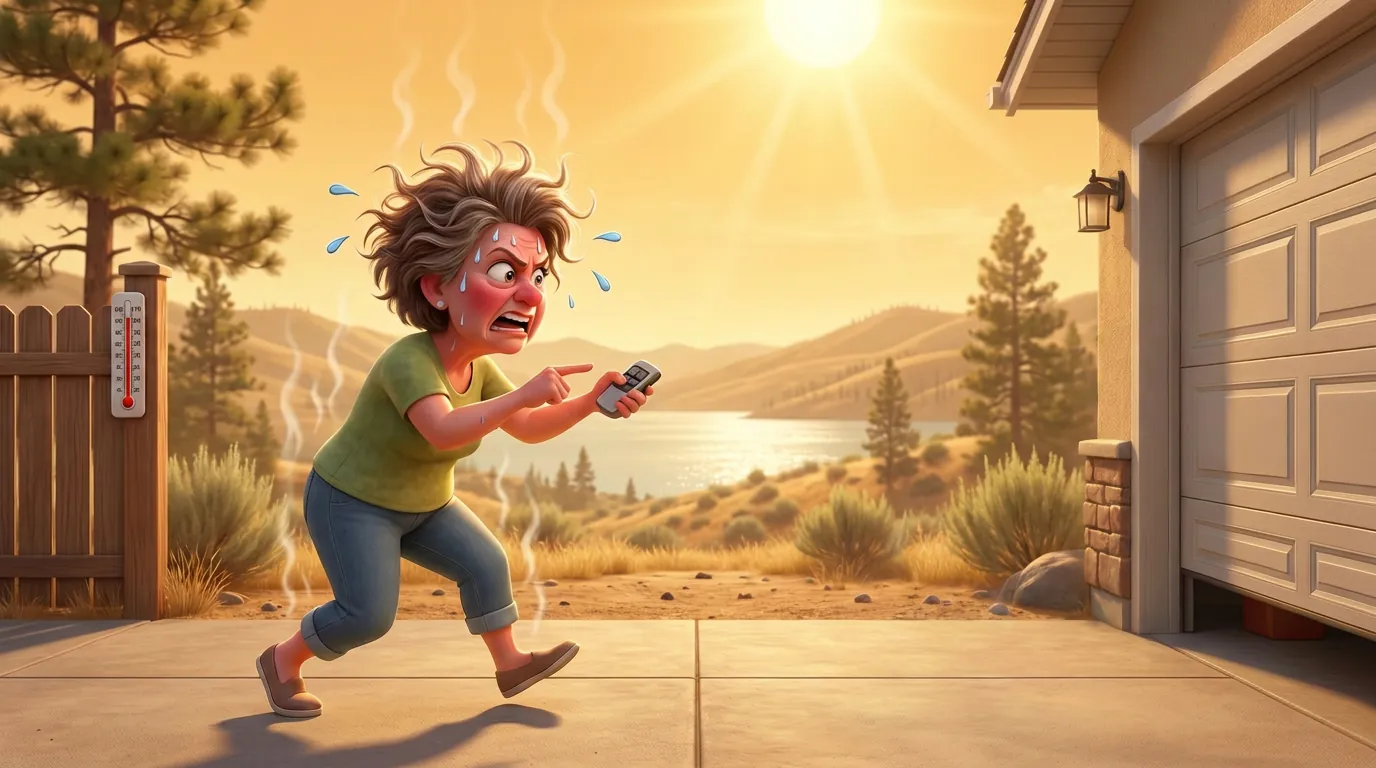
There is a special kind of summer frustration in Logan Lake: a garage remote that works only when it feels like it. You press the button in the driveway and nothing happens, you press it again and the door opens, and you never quite know which it will be. More often than not, the heat is the hidden cause. A remote that has been baking on a dashboard or roasting in a sun-soaked car gets pushed to its limits, and it starts to misbehave. The good news is that it almost always comes down to a few simple things you can sort out yourself.
The short answer: start with the battery, because heat drains a marginal one fast, then check range, interference, and programming, in that order. Most of the time the fix is near the top of the list. Let us walk through how heat plays into it and what to do.
How heat affects a remote
A garage remote is a small battery and a little circuit board, and neither loves extreme heat. Left on a dashboard in the Logan Lake sun, a remote can reach temperatures well above the outside air, and that heat does two things. It drains the battery faster than normal use would, and over time it stresses the electronics and the battery contacts inside. A battery that was merely weak becomes too weak to send a strong signal once it is hot.
That is why heat-season remote trouble so often looks like a range problem. As the battery weakens, the remote still works if you are right at the door but fails from across the driveway, and the failures get worse on the hottest afternoons. A remote that is fine in the cool of the morning and flaky by mid-afternoon is practically waving a flag that says heat and a tired battery.
The first and easiest move, then, is a fresh battery, and keeping the remote out of direct sun so the new one lasts. If a new battery restores reliable, full-range operation, you are done, and you have learned to clip the remote on the visor out of the sun rather than leave it baking on the dash. If a new battery does not fully fix it, the cause is further down the list, which is where a garage door opener check helps narrow things down.
The fixes, fastest to rarest
Work through these in order. Each is quick to test, and most people find their answer in the first two or three.
- Replace the battery, every time, before anything else, since heat makes a weak one worse.
- Keep the remote out of direct sun, on the visor rather than the dashboard.
- Check range and the opener’s antenna, which should hang down freely from the motor unit, not be coiled or tucked up.
- Look for interference from LED or CFL bulbs, Wi-Fi gear, or nearby electronics, especially anything added recently.
- Reprogram the remote through the opener’s learn button to restore a lost or partial pairing.
- Suspect the opener’s receiver if every remote and the keypad are flaky, not just one remote.
Work top to bottom and stop when the door behaves. The order matters, because replacing a whole remote when the real problem is a hot battery or interference just wastes money and leaves you no better off.
Range, antenna, and interference checks
Two of the most effective fixes cost nothing. The first is the antenna. The opener has a short wire antenna hanging from the motor housing, and over the years people tuck it up out of the way or it gets bumped. For best range it should hang straight down, unobstructed. If it is coiled around the rail or pinched, freeing it can noticeably restore range, which matters more when a heat-weakened battery is already sending a weaker signal.
The second is interference. The frequencies garage remotes use sit close to those used by some LED and CFL bulbs and various wireless devices, and when one of those broadcasts noise, it can drown out your remote’s signal intermittently. The tell is timing: if your remote got flaky right after you changed a garage bulb or added a device, swap the suspect out, ideally for a bulb rated as garage-door-opener compatible, and see if reliability returns.
If a fresh battery, a freed antenna, and ruling out interference still leave you with a flaky remote, the problem has likely moved to the hardware itself. At that point it is worth confirming whether the fault is the remote or the opener’s receiver, since the fixes are different and you do not want to buy remote after remote chasing a receiver problem.
When to replace the remote or receiver
At some point the fix is a part, not a tweak. If a single remote is physically worn, heat-damaged, or will not hold its programming after reprogramming, replacing that remote is cheap and easy, and a remote replacement sorts it in minutes. If multiple remotes and the keypad all act up together, the receiver inside the opener is the more likely fault, and that is the part to address instead of buying spare after spare.
Picture a typical Logan Lake pattern. A homeowner buys two new remotes over a summer because each one seems to fail in the heat, only to find the real problem was a tired receiver in an aging opener that could not reliably hear any of them on a hot day. Diagnosing the receiver first would have saved the cost of the spares. That is exactly why it pays to confirm whether the fault is the remote or the opener before spending.
If you have worked down the list and your remote is still playing games, we can pinpoint whether it is the remote, the antenna, interference, or the receiver, and fix the right one. for remote replacement in Logan Lake, call (778) 910-3106, or , and we will get your garage answering on the first press again. For anything pointing to a worn opener, we can handle the repair too.
Frequently Asked Questions
Can heat affect a garage door remote?
Yes. A remote left baking on a hot dashboard or in a sun-soaked car gets very hot, and heat drains its battery faster and can stress the small electronics inside. The most common result is a remote that works intermittently or only at close range, which often clears up with a fresh battery and keeping the remote out of direct sun.
Why does my garage remote work up close but not from a distance?
Shrinking range is the classic sign of a weak battery or a weak signal from the opener's antenna. Heat makes a marginal battery worse, so start by replacing it. If that does not restore the range, the opener's antenna wire may be tucked up or damaged, or something in the garage may be causing interference.
Should I leave my garage remote in the car in summer?
It is better not to leave it baking on the dashboard. Extreme heat shortens battery life and is hard on the electronics, and a visible remote in a parked car is also a security risk. Keep it clipped to a visor out of direct sun, or take it with you, and it will last longer and work more reliably.
How do I reprogram my garage door remote?
Most openers have a learn button on the motor unit. Press it, then press the remote button within about 30 seconds until the opener light blinks or clicks to confirm. The exact steps vary by brand, so check your opener's manual. Reprogramming often fixes a remote that has partially lost its pairing.
Is the problem my remote or the opener's receiver?
A quick test: if a second remote or the wall keypad also acts up, the issue is likely the opener's receiver or antenna, not the remote. If only one remote is flaky while everything else works reliably, the remote or its battery is the more likely culprit. That distinction guides the fix and avoids spending on the wrong part.
When should I replace my garage remote instead of repairing it?
Replace the remote when it is physically worn, heat-damaged, or no longer holds its programming after reprogramming, and replacement is cheap. If multiple remotes misbehave, the opener's receiver is the issue, and that is the part to address instead. A technician can confirm which before you spend on the wrong fix.