How to Open a Garage Door Manually (and Lock It Again)
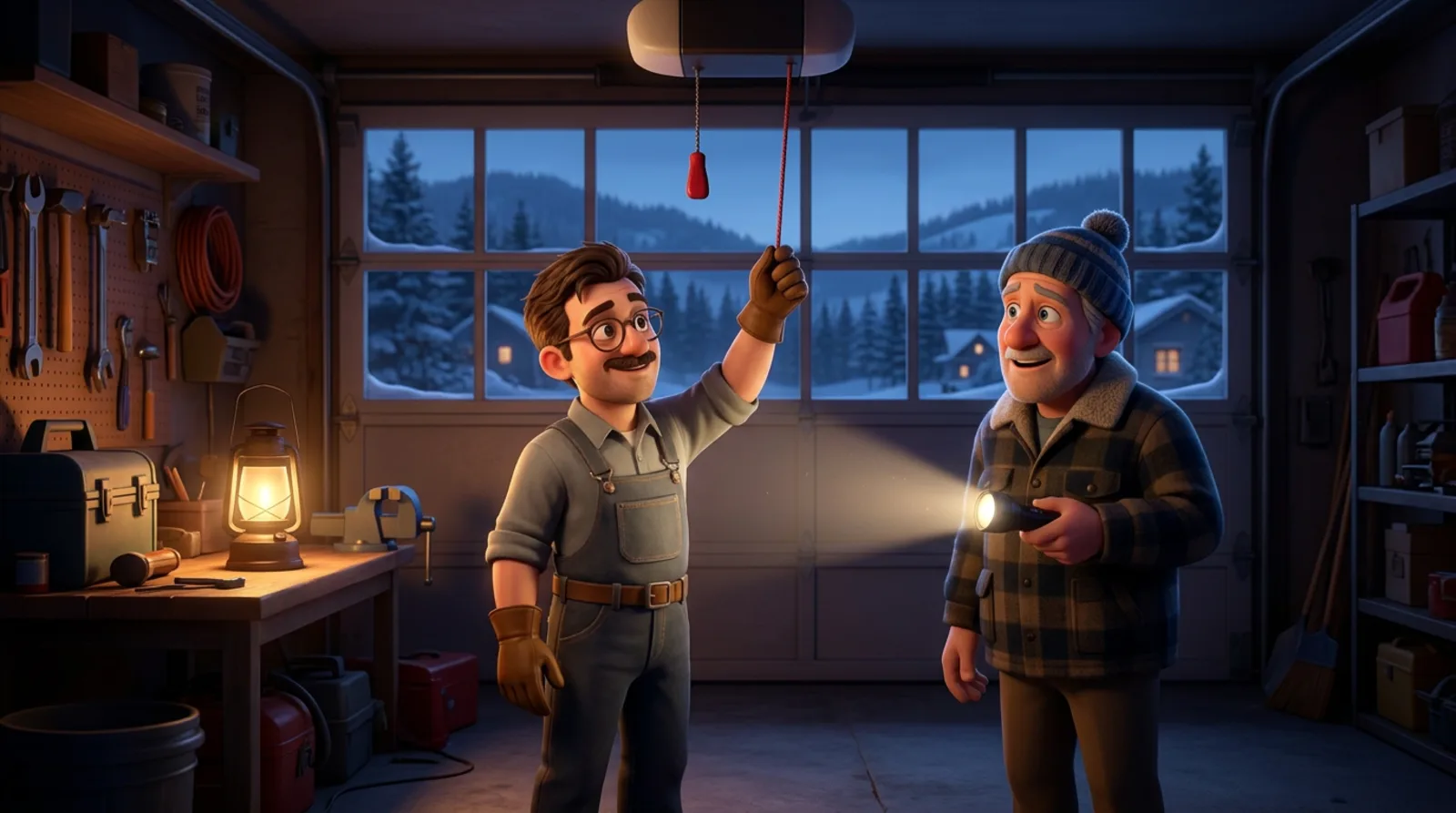
The Short Answer
To open a garage door manually, close the door fully if you can, pull the red emergency release cord hanging from the opener rail, then lift the door by the bottom handle. A balanced door should lift with moderate effort and stay put when you let go partway. Do not use the release if a spring or cable is broken, or if the door is stuck partly open, since the door can drop suddenly. When the power returns, reconnect the opener by setting the release and running the opener until the trolley clicks back on. While the door is disconnected, lock it with the inside slide lock or a clamp on the track.
Knowing how to do this before you need it saves a lot of stress the first time the power goes out with the car inside.
When you would need to
- Power outages during winter storms and summer wildfire season.
- An opener that has failed, such as a burned-out motor or stripped gear.
- A dead remote and no wall button access, while you sort out a new remote.
Before you pull the cord: safety checks
- Look at the springs. On a torsion spring door, look at the bar above the opening. A gap in the coil means a broken spring. On an extension spring door, look for a spring that is stretched out or hanging loose.
- Look at the cables. Frayed, loose, or snapped cables at the bottom corners of the door mean stop.
- Check the door position. The release is safest with the door fully closed. If it is stuck partway, do not release it; the door can fall.
- Clear the area. Keep kids, pets, and vehicles away from the door.
If any of these checks fails, leave the door alone and call a technician.
Step by step: opening the door by hand
- Make sure the door is fully closed.
- Pull the red emergency release cord straight down (some models: down and toward the door). You should hear or feel the trolley disconnect.
- Grip the bottom handle or a lift handle and lift with your legs, not your back.
- Raise the door fully and make sure it stays open. If it starts to drift down, it is not balanced; hold it, lower it gently, and have the springs checked.
- Close it the same way, lowering it gently by the handle. Never let it drop.
Reconnecting the opener
When the power is back or the opener is fixed:
- Close the door by hand.
- Pull the release cord again (on many models, toward the door and down) to set the trolley to reconnect. Some models have a lever on the trolley instead.
- Run the opener with the remote or wall button. The trolley travels along the rail and clicks onto the door’s carriage.
- Run the door through a full open and close to confirm everything works, then test the safety sensors by closing the door on an object such as a roll of paper towels.
Locking the door while it’s disconnected
A disconnected door can be lifted from outside, so lock it while the opener is off:
- Slide lock or T-handle lock. Many doors have one on the inside. Slide the bolt into the track hole or turn the handle to lock.
- C-clamp on the track. If there is no lock, tighten a C-clamp onto the track just above a roller on each side. The roller cannot pass it, so the door cannot be lifted.
Always unlock or remove the clamps before using the opener. Running the opener against a locked door can damage the opener, the door, or both.
Common problems when opening by hand
- The cord will not release. The door may be under tension against the opener. Make sure the door is fully closed, push it down gently with one hand, and pull the cord again.
- The door is very heavy. Stop. A balanced door should lift with moderate effort; a very heavy one usually has a broken or worn-out spring.
- The door will not stay open. It drifts down when you let go. That is a balance problem: do not prop it open, lower it gently, and have the springs adjusted.
- The door is stuck to the floor. In winter, the bottom seal can freeze to the concrete. Free it gently with warm (not boiling) water or a plastic scraper; never yank it.
- The trolley will not reconnect. Check that the release lever is in the reconnect position, then run the opener a full cycle, or lift the door by hand slowly until it clicks onto the trolley.
Power outages in Merritt and the Nicola Valley
Merritt and the Nicola Valley see their share of outages, from winter storms and heavy snow on the lines to summer wildfire-season shutoffs. On a cold morning, the release cord may be stiff, and the door heavier than usual as the lubricant thickens, so do not be surprised if it takes more effort than in summer. If it feels much heavier than that, stop: the cold is also when tired springs are most likely to break.
Two upgrades make outages a non-event. A battery-backup opener runs the door for a number of cycles without power, and an outside emergency release lock lets you open the door from the driveway if the garage has no other entrance. If your door will not lift, or you find a broken spring, garage door repair in Merritt can help, and for stuck doors outside business hours, Midnight Rescue in Merritt is available. Our guide to keeping your garage door moving through a cold snap covers winter prep.
Get your door outage-ready
Want battery backup, an outside release, or a check that your door is balanced enough to lift by hand? , call (778) 910-3106, or , and a technician will set it up so the next outage is just an inconvenience.
Frequently Asked Questions
How do I open my garage door manually?
With the door fully closed, pull the red emergency release cord hanging from the opener rail. This disconnects the door from the opener. Then lift the door by the bottom handle, using your legs. A properly balanced door lifts with moderate effort and stays put when you let go partway.
When should I not use the emergency release?
Do not pull it if a spring or cable is broken, if the door is stuck partly open, or if the door feels extremely heavy. Without working springs, the door can weigh well over 70 kg and may drop suddenly once disconnected from the opener.
How do I reconnect my garage door to the opener?
On most openers, pull the release cord toward the door (or down and back, depending on model) to set the trolley to reconnect, then run the opener. The trolley travels along the rail and clicks back onto the door's carriage. You can also lift the door by hand until it re-engages.
How do I lock my garage door when the opener is disconnected?
Use the manual slide lock or the T-handle lock on the inside of the door if it has one. If not, a C-clamp fastened tightly on the track just above a roller prevents the door from being lifted. Remove the clamp or unlock the door before reconnecting and using the opener.
Can I open my garage door from outside without power?
Only if the door has an outside emergency release key lock, which some homes add for garages with no other entrance. Without one, you need to access the release cord from inside the garage. A battery-backup opener avoids the problem entirely during most outages.
Will my garage door open in a power outage?
Not with the opener, unless it has battery backup. Many current openers include a battery that runs the door for a number of cycles during an outage. Without one, you need the emergency release and a door that is balanced by working springs.