Repair or Replace Your Salmon Arm Garage Door? What the Shuswap's Climate Decides
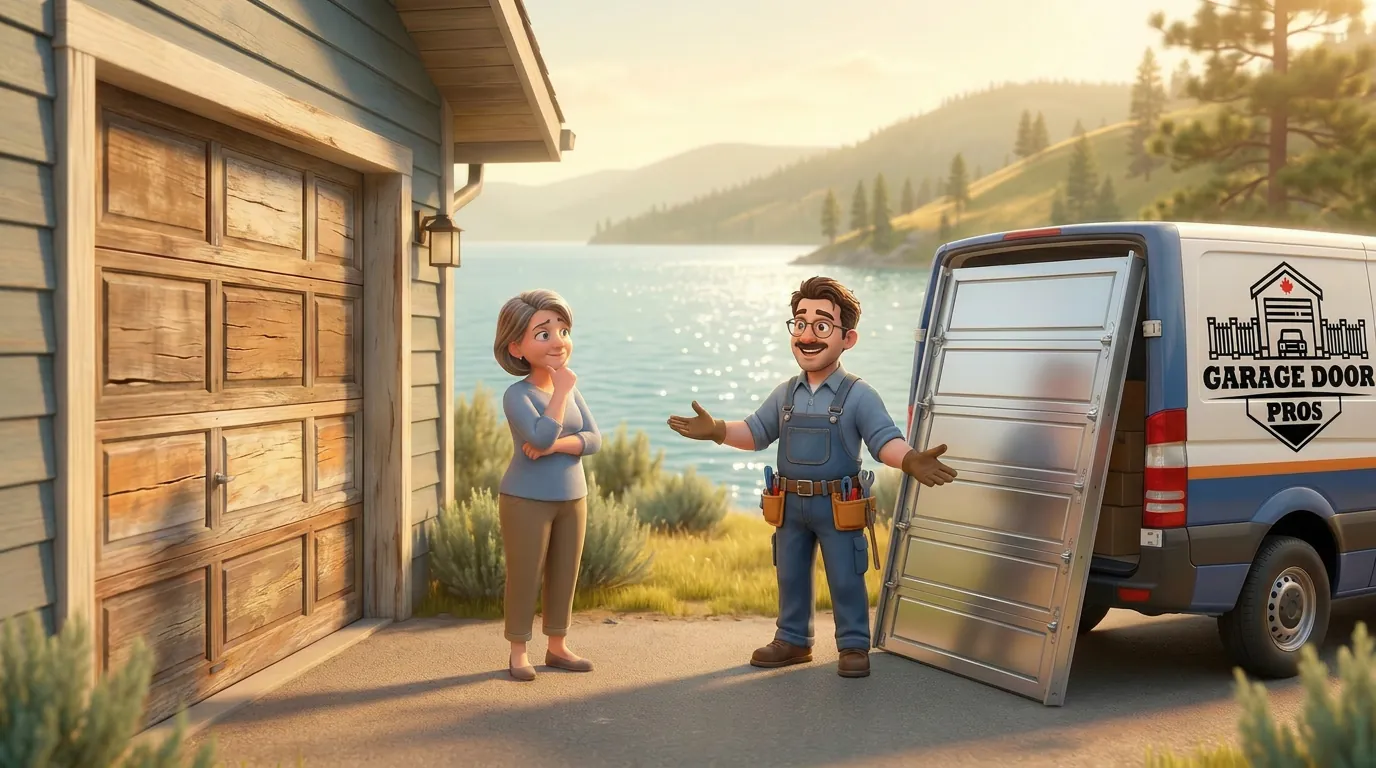
A garage door in Salmon Arm leads a hard life. It bakes under intense summer sun and 40-degree-plus heat in July, then sits through hard freezes near minus 20 in January, and it has to keep working smoothly through both. That huge annual swing, plus the extra moisture that comes with living near Shuswap Lake, ages a door faster than a mild climate ever would. So when something goes wrong, the real question is not just “can this be fixed,” but “is fixing it the smart money here.” This guide walks through how the Shuswap’s climate and its lake-recreation market should tip your repair-or-replace decision.
The short answer: if your door is under about 15 years old and the fix costs less than half the price of a new door, repair it. If it is past 20 years, failing in more than one place, or the repair is climbing toward half the cost of a new insulated door, replacement is usually the better value, especially on a lakeview home you might sell. The rest comes down to which parts are failing and why.
What actually fails on doors around the Shuswap
Our climate has a signature failure profile, and knowing it helps you read your own door. The big temperature swing is the main culprit. Every hot-to-cold cycle expands and contracts the panels, the springs, and the rollers, and that constant flexing fatigues metal over time. Springs that might last 12 years in a mild climate can give out years sooner here, and rollers crack and seize from the same repeated stress.
Intense summer sun adds its own damage. It heats thin or dark panels enough to warp them so they look wavy, and it bakes the finish until it fades and chalks. Dust and wildfire smoke, both regular summer visitors, work their way into tracks and rollers and grind at them. Then there is moisture. The Shuswap bench is genuinely dry, but lakefront and near-lake lots hold more humidity, and that speeds rust on springs, hinges, and rollers compared with a door up on the dry acreage. A door that lives 50 metres from the water simply faces a different aging path than one a few kilometres inland.
The good news is that most of these are wear items, not death sentences for the door. A faded finish, a worn spring, or a seized roller is normal in our climate and is usually worth fixing on an otherwise solid door. The trick is telling routine wear apart from the signs that the door itself is finished.
The age rule and the 50-percent rule
Two simple rules cut through most of the indecision. The first is the age rule. A quality steel door often lasts 20 to 30 years, but in the Thompson-Shuswap, count on the lower end unless it has been well maintained. Around the 20-year mark, parts start failing in clusters rather than one at a time, and at that point sinking money into repairs tends to be a losing game. Under roughly 15 years, a well-built door usually has plenty of life left and is worth keeping in good repair.
The second is the 50-percent rule: if a repair costs more than half the price of a new door, lean toward replacing. A 200-dollar spring swap on a 10-year-old insulated door is an easy yes. A repair that creeps toward half the cost of a new door, on a door already showing its age, is the universe telling you to replace. Use the two rules together, because either one alone can mislead. A cheap fix on a 25-year-old door can still be the wrong call if three other parts are about to fail, and an expensive-sounding repair on a nearly new door is often still worth it.
When you are weighing a specific fault, professional garage door repair can usually restore a sound door for a fraction of replacement cost. The judgment call is whether you are fixing a good door or propping up a tired one, and that is where the lists below help.
Repairs almost always worth it vs. signs it’s time to replace
Here is the practical split for a Shuswap home.
Repairs almost always worth it (on a door under ~15 years):
- Broken or worn springs, which are normal wear items and a routine fix
- Cracked or seized rollers and worn hinges, common from our temperature cycling
- A worn or noisy opener, often replaceable on its own without a new door
- Frayed cables, off-track sections, or a single bent panel from an impact
- Damaged weather seal or bottom gasket, cheap to renew and worth doing
- Surface rust on hardware caught early, especially on near-lake homes
Signs it’s time to replace:
- The door is past 20 years and failing in more than one place at once
- Warped, cracked, or sun-faded panels that no longer look or seal right
- Repeated breakdowns where you are calling for a fix every season
- The door has come off the track more than once, suggesting deeper wear
- Rusted-through springs, hinges, or rollers rather than light surface rust
- Repair quotes climbing past half the price of a new insulated door
One isolated item from the first list is a repair, full stop. A handful of items from the second list, stacked on an aging door, is your signal to replace. Keeping a sound door healthy with regular garage door maintenance is what keeps you in the first column for as long as possible, and it is far cheaper than a string of emergency fixes.
Resale in a lake and retirement market
The Shuswap is a recreation and retirement market. Buyers come for the lake, the houseboating out of Salmon Arm, and the easy pace, and a lot of them are comparing tidy second homes and lakeview listings side by side. In that crowd, curb appeal carries real weight, and the garage door is often the single biggest surface on the front of the house. A sagging, faded, or noisy door makes an otherwise lovely lakeview home feel neglected, and it hands buyers an easy reason to negotiate the price down.
A new insulated door does the opposite. It is consistently one of the highest-return upgrades in real estate, often recovering most of its cost at sale, and it makes the whole home read as cared-for. On a recreation property that may sit empty part of the year, the insulation and tighter seal of a new door also help with comfort and security, which matters to buyers picturing weekends away. If you are inside a couple of years of selling, replacing a tired door is frequently the better play than nursing it through one more season of repairs.
Picture a real scenario. A homeowner on a near-lake lot in Salmon Arm has a 22-year-old single-skin steel door. The springs just broke, two rollers are seized, the bottom panel is sun-warped and a hinge is rusting from the lake humidity, and they are thinking of listing next spring. Repairing all of that lands close to half the cost of a new door, on a door already past 20 years and showing several failures at once. Both rules point the same way, and so does the market: a new insulated door for a few hundred dollars more than the patch-up job will look sharp in listing photos, work reliably, and likely return most of its cost at sale. That is a clear replace.
When the rules point the other way and you have a sound door, local garage door repair in Salmon Arm will get it back in shape for far less. And if it is time for a new one, a quality garage door installation specced for both ends of our temperature range is the upgrade that pays off twice, in daily use and at resale.
Not sure which way your door tips? , call (778) 910-3106, or , and we will give you an honest read on whether to repair or replace.
Frequently Asked Questions
Should I repair or replace my garage door?
If the door is under about 15 years old and the repair costs less than half the price of a new door, repairing is usually the smart move. If it is past 20 years, failing in more than one spot, or the repair is creeping toward half the cost of a new insulated door, replacement is the better value. In the Shuswap, also weigh whether a tired door is dragging down the look of a lakeview home you might sell.
How long does a garage door last in the Shuswap?
A good steel door often lasts 20 to 30 years here, but the big temperature swings and intense summer sun age it faster than a mild climate would. Springs and rollers wear out sooner because every hot-to-cold cycle flexes them. Near-lake moisture can also rust hardware ahead of schedule, so the lifespan you actually get depends a lot on upkeep.
What is the 50-percent rule for garage doors?
The 50-percent rule says that if a repair costs more than half the price of a new door, you should usually replace instead of fix. It keeps you from pouring money into an aging door that will fail again soon. Pair it with the door's age, because a cheap repair on a 25-year-old door can still be the wrong call if other parts are about to go.
Is it worth replacing a garage door before selling a Salmon Arm home?
Often yes, especially on a lakeview or recreation property where curb appeal carries weight. A new insulated door is one of the highest-return upgrades in real estate and it removes an easy point for buyers to negotiate down. A sagging, faded, or noisy door does the opposite and makes a nice listing feel neglected.
Can a broken garage door spring just be replaced?
Yes, and on an otherwise sound door it almost always should be. A spring is a wear item, not a sign the whole door is finished, so replacing it is normal maintenance. Springs are under high tension and are dangerous to handle, so this is a job for a technician rather than a DIY fix.
Does lake moisture really rust garage door hardware faster?
Near the lake it can. The Shuswap bench is dry, but lakefront and low-lying near-water lots hold more humidity, which speeds rust on springs, hinges, and rollers compared with a drier acreage. Galvanized or coated hardware and regular lubrication slow it down a lot. If you are seeing orange streaks on the hardware, it is worth a look before it spreads.
How do I know if my garage door is past saving?
Watch for several problems at once, such as warped or cracked panels, repeated breakdowns, a door that has come off the track more than once, and rusted-through hardware. One isolated fault is usually repairable, but a stack of them on a door over 20 years old points to replacement. A technician can tell you quickly whether you are fixing a good door or propping up a tired one.