Add Wi-Fi Control and Heat Alerts to Your Kamloops Garage Door Opener
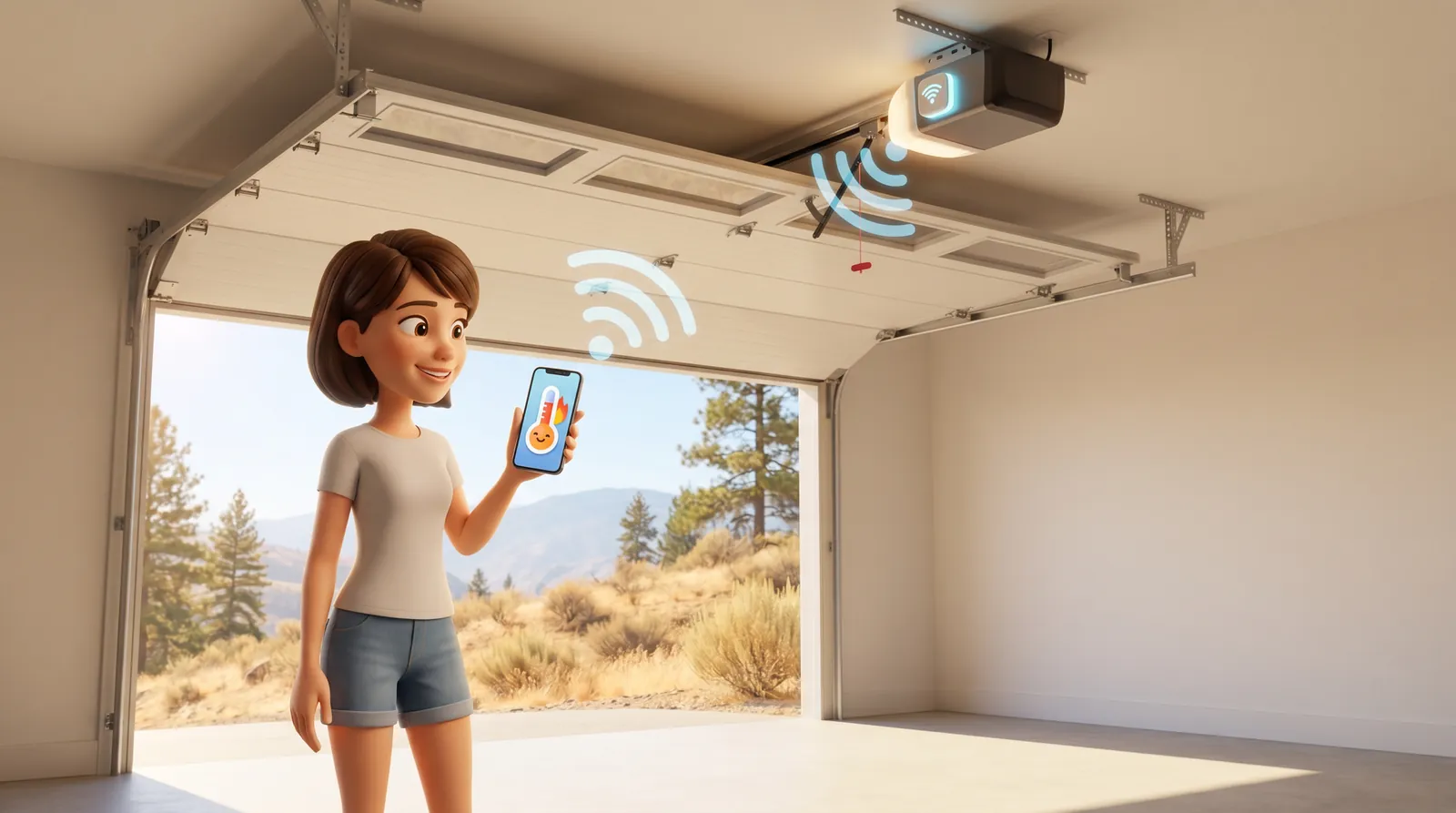
You leave for a long weekend at Shuswap Lake, and three hours into the drive the question lands: did the garage door close all the way? On a 38-degree Kamloops afternoon that is more than a nagging worry, because a sealed garage in our summers can climb into the mid-40s, and an open one is an invitation to heat, dust, and smoke. A smart Wi-Fi opener answers that question from your phone and, with the right add-ons, warns you before the garage ever becomes a problem. That second part, the heat alerts and away-from-home monitoring, is where it really earns its place here.
The short version: phone control is the entry-level perk, but the features worth caring about in Kamloops are temperature alerts that tell you when your garage is turning into an oven, real-time door status while you are away at the lake or Sun Peaks, and automatic closing or venting so a forgotten door does not bake all day. Here is what each of those actually does for a hot-climate garage, and how to get them.
Heat alerts: knowing before your garage becomes an oven
A closed, uninsulated garage facing the afternoon sun runs far hotter than the outdoor temperature. On a typical Kamloops scorcher in the high 30s, the inside of that box can push into the mid-40s and stay there for hours after sunset. Most homeowners never know the number, which is the problem, because plenty of what lives in a garage does not tolerate that kind of heat well.
Pair a small wireless temperature sensor with your smart opener or home-automation app and you flip that blind spot into an early warning. Set a threshold, and the moment the garage crosses it your phone buzzes, so you can crack the door to vent, move something sensitive indoors, or confirm the second fridge is still holding. The alert is cheap insurance against the slow, invisible damage you only notice weeks later when the paint has separated or the electronics have quit.
Here is what those alerts and the monitoring around them actually save you:
- Heat-sensitive supplies. Paint, stains, adhesives, and aerosols degrade or build pressure in extreme heat. A warning lets you open up or relocate them before they spoil or become a hazard.
- A second fridge or freezer. Beverage and overflow fridges work overtime in a 45-degree garage and can fail. An alert flags a creeping temperature before the contents do.
- Electronics and batteries. Tool batteries, a spare laptop, or anything with a lithium cell ages fast and behaves unpredictably when cooked. Catching the heat early protects them.
- Wasted runtime and wear. Knowing when the garage is at its hottest tells you exactly when to vent, so you are not running a portable AC or fan blindly all afternoon.
- Peace of mind on bad-air days. During wildfire season, a status check confirms the door is sealed against smoke instead of left ajar.
Remote monitoring for lake days, Sun Peaks, and wildfire season
The single most-used feature people keep is the status check. Open the app and the door’s real state is right there: open or closed, with the time it last moved. No guessing, no turning the car around halfway to the lake. If it is open, one tap closes it from wherever you are sitting, and you get back a confirmation that it actually came down.
That matters more here than in a mild coastal town. A Kamloops summer means stretches away from home, days at Shuswap or Kamloops Lake, ski-season trips up to Sun Peaks, and wildfire smoke rolling into the valley. In each case the same small habit pays off. Want the garage sealed against dust off a gravel approach? Check it. Smoke advisory while you are out of town? Confirm the door is shut so the garage is not pulling in smoky air. Letting a neighbour grab the trailer? You can watch it open and close in the log.
Real-time status, remote close, and a timestamped history of every open and close are the backbone of this. The history quietly answers the everyday questions, like whether the kids made it home from school or when the delivery driver came and went, without you being there. If your opener is acting up before you put it online, it is worth booking garage door opener service first so the smart layer sits on top of hardware that works.
Auto-close and scheduled venting that work while you forget
Alerts are reactive; automation is the part that protects the garage without you lifting a finger. Two settings do most of the heavy lifting in a hot climate.
Auto-close shuts the door on its own after a set number of minutes open. It is the cure for the door left up after you carried in groceries and got distracted, the exact scenario that leaves a garage gaping through the hottest part of the afternoon. Set it to ten or fifteen minutes and a forgotten door simply closes itself, with a notification so you know it happened.
Scheduled venting runs the other direction. You can program the door to crack or fully open at a cooler time, early morning or late evening, to flush the day’s trapped heat out before it builds again. For a garage you use as a workshop, a brief scheduled vent before you head out there in the evening makes the space usable instead of stifling. Many smart openers also tie into voice assistants and location-based routines, so the door can close itself when your phone leaves the neighbourhood, one less thing to think about on the way out the door.
How you get it: a smart opener or a retrofit module
You do not necessarily need a new opener for any of this. There are two routes, and which one fits depends on the opener you already have.
- A retrofit Wi-Fi module connects to your current opener’s control terminals and brings it online, usually for $30 to $60 plus install. It is the economical path when your opener is recent, quiet, and reliable and you just want the smart features. Add-on temperature and door-position sensors handle the heat alerts and status.
- A new smart opener has Wi-Fi and the app integrations built in. This is the better spend when your existing unit is old, loud, slow, or lacks rolling-code security, because bolting smart features onto a failing opener only delays a replacement you will need anyway.
If you are not sure which camp you fall into, the model and date stamped on the motor housing usually tell the story, and that is the first thing we check on a visit. We can fit a module to a healthy opener, or handle a full garage door opener replacement when an upgrade is the smarter long-term call. Whatever you choose, protect the account behind it with a strong password and two-factor authentication, because the convenience is only ever as safe as that login.
A real example pulls it together. A Sahali homeowner stores leftover deck stain, a tool-battery charger, and a beverage fridge in a south-facing garage. In late July they leave for four days at Shuswap, and on day two a smoke advisory hits while the garage sensor pings 44 degrees by mid-afternoon. From a dock chair they confirm the door is closed against the smoke, see the heat alert, and trigger a short vent at 9 p.m. once the outside air has cooled, dropping the inside temperature before it can cook the stain or push the fridge to failure. None of that required being home, and none of it required a brand-new door, just the opener talking to the network.
If you want a hand deciding between a module and an upgrade, or you would rather have it installed and dialed in correctly the first time, we are glad to help, and we can sort out any opener repairs before it goes online. To get heat alerts and remote monitoring set up for your Kamloops garage door opener, , call (778) 910-3106, or
Frequently Asked Questions
Can a smart opener actually warn me when my garage is overheating?
Yes, when you add a temperature sensor to the system. Many smart openers and home-automation setups let you place a small wireless thermometer in the garage and push an alert to your phone once it crosses a threshold you choose, say the high 30s Celsius. That early warning is the difference between catching a baking garage and discovering ruined paint or a struggling second fridge after the fact.
How does remote monitoring help during a Kamloops getaway?
When you are at the lake or up at Sun Peaks, a smart opener shows the door's real status in the app so you never wonder whether you left it open. If it is open you close it with one tap, no drive back required. During wildfire season that same remote check lets you confirm the garage is sealed against smoke and embers from wherever you happen to be.
What can I do with auto-close and scheduled venting?
Auto-close sets the door to shut on its own after a chosen number of minutes, so a forgotten door never bakes all afternoon. Scheduled venting does the reverse, cracking or fully opening the door at cooler times of day to flush out trapped heat. Together they keep the garage from turning into an oven without you having to think about it.
Do heat alerts protect the things I store in the garage?
They can make a real difference. Paint, adhesives, electronics, batteries, and a beverage fridge all suffer in extreme heat, and a timely alert lets you open the door or move items before damage sets in. The sensor simply gives you a chance to act instead of finding the harm weeks later.
Can I share garage access and see a log of who opened it?
Most smart opener apps let you invite family members so everyone can open, close, and check the door from their own phone. Better systems keep a timestamped history of every open and close, which is handy for knowing the kids got home safely or confirming when a one-time visitor came and went. You can usually revoke a person's access at any time.
Does smart control replace the comfort of insulating the garage?
No, the two work together. Insulation and weatherstripping slow how fast a Kamloops garage heats up, while smart alerts and venting tell you when to act and let air out when it counts. If your space runs especially hot, pairing a smart opener with better sealing gives you the strongest result.