After the Smoke Settles: Clearing Wildfire Ash From Your Kamloops Garage Door
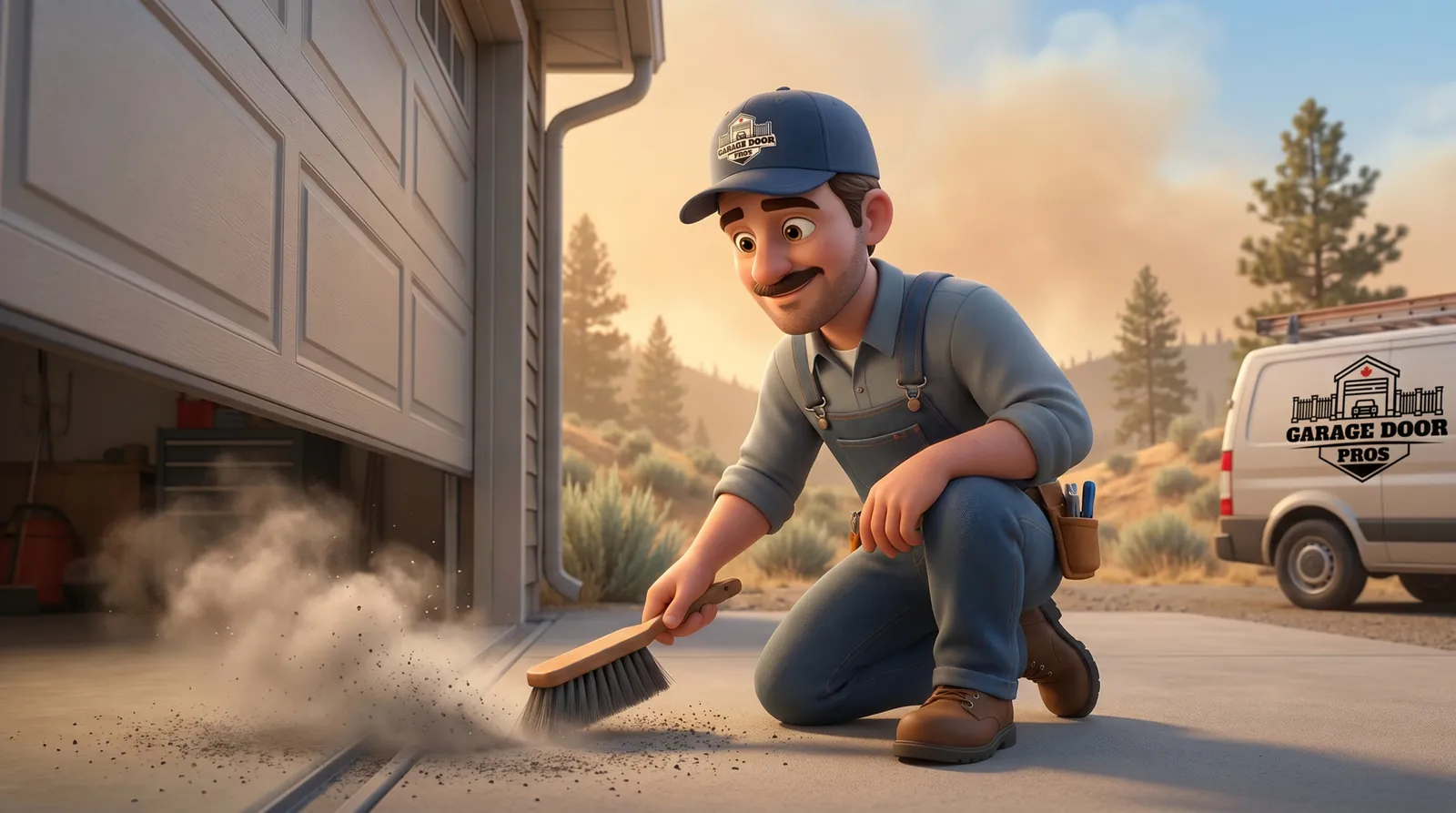
Anyone who has spent a summer in Kamloops knows the routine: a few weeks of orange skies, an air-quality advisory pinned to the fridge, and a fine grey film that settles over the deck, the truck, and everything else once the smoke finally clears. Sitting in fire country means a bad interface-fire stretch leaves wildfire ash on every outdoor surface, and your garage door is right in the path of it. This is not the same as everyday dust drifting off the bench. A smoke event drops a distinct, gritty deposit that can foul the door’s safety sensors, pack the tracks, and quietly chew at the seals if it is left alone.
The short answer: once the advisory lifts, give the door a proper post-smoke cleanup. Wipe the floor-level photo-eye sensors so the door stops reversing, dry-wipe and vacuum the ash out of the tracks without ever greasing them, brush it off the rollers and hinges, and clean the seals so the rubber does not dry out. Below is why ash is its own problem and exactly how to clear it.
What wildfire ash actually does to your door
Ash is not ordinary dust. It is finer, slightly alkaline, and abrasive, and after a heavy smoke spell it gets everywhere, including the parts of the door you never think about. The most immediate nuisance shows up at the two photo-eye sensors mounted a few inches off the floor on either side of the opening. These sensors shoot an invisible beam across the doorway, and if anything interrupts it, the door is designed to stop and reverse for safety. A film of ash on the lenses scatters that beam just enough to read as a blockage, so the door refuses to close, or closes partway and rolls back up. Many a Kamloops homeowner has stood in the driveway after a smoky week, jabbing the remote and wondering what broke, when the real culprit is a grey haze on a plastic lens.
The damage you do not see right away is in the moving parts. Ash settles along the tracks and dusts the rollers, and because it is gritty, every pass of the door grinds it against the wheels and bearings. Over a single fire season that abrasion adds up, wearing rollers and shortening their life the way fine sandpaper would. It also collects in the hinges, where it dries out the pivot points and makes the door rattle and squeak.
Then there are the seals. The rubber astragal along the bottom of the door and the weatherstripping down the sides are your barrier against drafts, dust, and pests, and ash loves to settle into them. Once it is packed into the rubber it holds abrasive grit against the surface and helps draw moisture out, which speeds up the cracking and shrinking that the dry Kamloops climate already encourages. A seal that hardens and pulls away stops sealing, and then the next dusty wind blows even more grit straight into the garage.
Your post-smoke cleanup checklist
Wait until the air-quality advisory has lifted and it is genuinely safe to be working in the garage, then set aside twenty minutes or so. You will want a few clean microfibre cloths, a shop vacuum with a brush attachment, a soft brush or old toothbrush, and a light touch. Work with the door closed and the opener powered down so nothing can start moving while your hands are near the tracks.
- Power down or unplug the opener before you start, and close the door fully.
- Wipe both photo-eye sensor lenses with a dry or barely damp microfibre cloth, then confirm the indicator lights glow steadily.
- Vacuum the loose ash out of both vertical tracks, top to bottom, then wipe the inside faces clean and dry.
- Brush the ash off each roller and out of the hinges, wiping away anything that smears.
- Run a clean cloth along the bottom astragal seal and the side weatherstripping, and check the rubber for stiffness or cracks.
- Restore power and cycle the door a few times, watching that it closes smoothly and does not reverse.
Notice what is missing from that list: at no point do you spray lubricant into the tracks. That is the single most important rule after a smoke event, and it is worth its own section.
Why you wipe the tracks but never grease them
It is tempting, after seeing how much grit came out of the channel, to hit the tracks with a spray lubricant so the door glides again. Do not. The tracks are simply a guide rail for the rollers to follow, not a moving part that needs lubrication. The moment you put oil or grease in there, it becomes flypaper for ash. Within days that film turns into a dark, abrasive paste that grinds against the rollers every cycle and wears them out faster than dry, dirty track ever would. We see the aftermath of this on service calls all the time, usually a homeowner who meant well and ended up with a door that runs rougher than before.
So keep the two jobs apart. The tracks get cleaned until they are dry and clear, full stop. The lubricant goes on the parts that actually rub against each other, the rollers, hinges, springs, and bearings, in a light coat with the excess wiped off so it does not drip and catch more grit. Done this way, the door runs quietly and the ash has nothing sticky to cling to. This is exactly the kind of detail a thorough garage door maintenance visit covers, and it matters more in a wildfire-prone town than in a milder climate.
A real Kamloops scenario, and when to call
Picture a late-July week in Kamloops with a fire burning on the bench above town. The advisory finally drops, you head out to grab something from the garage, and the door starts down, stops, and rolls back up. You try again, same thing. Before assuming the opener has failed, look at the two sensors near the floor. Ten to one they are wearing a grey coat of ash, and a quick wipe of each lens has the door closing normally again. That five-minute fix is the most common post-smoke call we talk people through.
Some things, though, are worth handing off. If the door still reverses after the sensors are clean, the alignment or wiring may have shifted and needs a closer look. If a roller is grinding or you can see it wobbling, the ash has likely already worn the bearing and the roller should be replaced before it drags the door out of balance. And if a build-up of grit and a worn roller have pulled the door off its track, stop using it and treat it as a real repair, not a cleaning job. Hardened, cracked seals are also a job worth booking, since fitting fresh weatherstripping correctly keeps the next smoke season from getting back in.
Most of the post-smoke cleanup is honest homeowner work, but a yearly professional check of the springs, cables, and balance, the high-tension parts you should never touch yourself, catches the ash-related wear before it becomes a breakdown. If your door is reversing, grinding, or running rough after a smoky stretch and a good cleaning has not sorted it, let us take a look. for garage door maintenance in Kamloops, call (778) 910-3106, or , and we will get the ash cleared and your door running clean for the rest of fire season. For worn parts or sensor trouble that a wipe-down will not fix, a quick garage door repair sets things right.
Frequently Asked Questions
Why does my garage door reverse after a smoky wildfire stretch?
A film of fine ash on the two photo-eye sensors near the floor is the most common reason. The sensors read that haze as something blocking the beam and refuse to let the door close, reversing it instead. A gentle wipe of each lens with a clean, dry microfibre cloth usually clears it in seconds.
Is wildfire ash actually harmful to a garage door?
Yes, over a season it is. Wildfire ash is fine, abrasive, and slightly alkaline, so as it packs into tracks and works into rollers it grinds the moving parts like a slow sandpaper. It also dries out and degrades the rubber seals, which is why a post-smoke cleanup pays off.
Should I lubricate my garage door tracks after a smoke event?
No, never grease the tracks. Oil or grease in the track traps ash and turns it into an abrasive paste that wears the rollers faster. Wipe and vacuum the tracks dry, and save the lubricant for the rollers, hinges, and springs instead.
How do I clean ash off the garage door sensors safely?
Power down or unplug the opener first, then wipe each sensor lens with a dry or barely damp microfibre cloth using a light touch. Avoid solvents and harsh sprays, which can cloud the lens or seep inside. Check that both sensor lights glow steadily afterward, which confirms the beam is clear.
How soon after a wildfire-smoke spell should I clean the door?
Once the air-quality advisory lifts and it is safe to work in the garage, do it within a week or two. The longer ash sits in the tracks and seals, the more it packs down and the harder it is to remove. A prompt cleanup keeps a quick chore from becoming a wear problem.
Do the seals really need attention after wildfire smoke?
They do, and people often skip them. Ash settles into the bottom astragal seal and the side weatherstripping, where it holds grit against the rubber and speeds up cracking and shrinkage. Wiping the seals clean and checking them for stiffness keeps your draft and dust barrier intact through the rest of the season.