Is Garage Door Damage Covered by Insurance? A Chase Homeowner's Guide
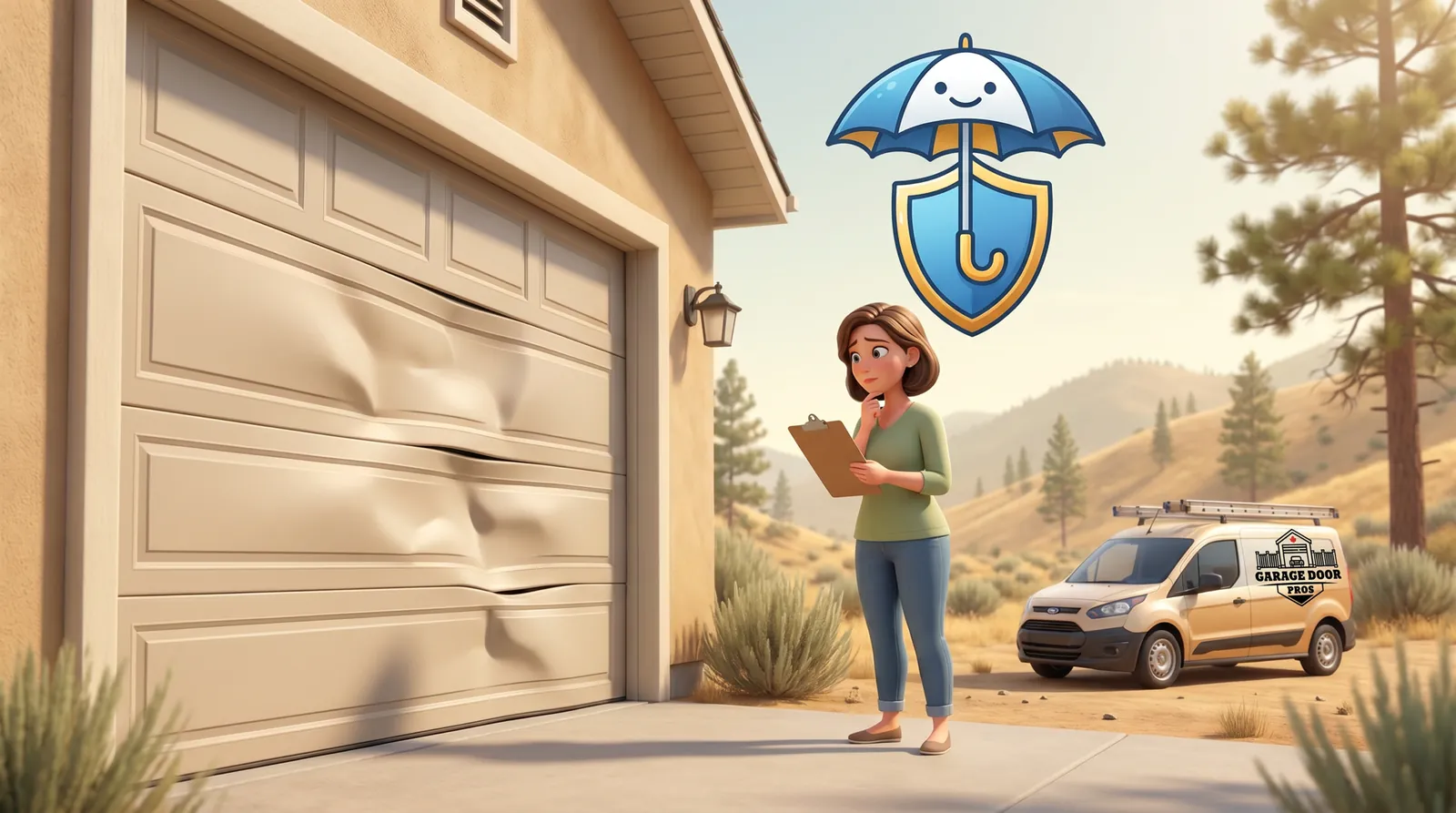
A windstorm rolls through Chase overnight, and in the morning you find your garage door dented, bowed, or hanging crooked. Or a wildfire-season ember, a curious deer, or someone’s bumper does the damage instead. The first question most homeowners ask is the practical one: will insurance pay for this, or am I on my own? The honest answer is that it depends on what caused the damage and what your specific policy says.
Here is the short version: home insurance often covers garage door damage when it comes from a sudden, accidental, covered peril, such as a windstorm, fire, vandalism, theft, or a falling tree, but it generally does not cover gradual problems like wear and tear, rust, age, or a spring that simply wore out. The rest of this guide walks through how to tell the difference, the deductible math that decides whether a claim is even worth it, and a concrete Chase scenario. Treat this as general homeowner education, not personalized insurance advice, and confirm every detail with your own insurer or broker.
Covered perils versus gradual wear
Most home policies are built around the idea of sudden and accidental loss. If something unexpected damages your door in a single event, and that event is a peril your policy covers, you are usually in claimable territory. If the door slowly failed because parts aged out or maintenance was skipped, that is considered your responsibility, not the insurer’s.
That distinction matters a lot in the Thompson-Shuswap, where the weather does real damage. Spring and summer windstorms can twist panels and pull doors off balance. Wildfire season brings fire risk and, occasionally, direct flame or heat damage. Wildlife is a genuine factor on rural and acreage properties, where an animal can run into or push against a door. And our big temperature swings, from baking summer afternoons to hard winter cold, put steady stress on every moving part. The weather-event damage tends to be claimable; the slow stress-and-age damage usually is not.
Here is a general guide to how the two columns typically break down. Your policy is the final word, but this is the common pattern.
- Typically covered (sudden, accidental, covered peril): windstorm damage that dents or bends the door; fire or wildfire damage; a vehicle driven into the door by someone else; theft, break-in, vandalism, or attempted forced entry; a tree or large branch falling on the garage; sudden impact from a covered event.
- Typically not covered (gradual or maintenance-related): normal wear and tear; a worn-out or broken spring or cable; rust and corrosion; damage from age or deferred maintenance; mechanical failure of an old opener; rodent or pest damage in many policies; cosmetic fading that is not from a sudden event.
If your door is simply old and finally gave out, that is almost always a repair you pay for yourself. The good news is that a worn spring, a frayed cable, or a door that has jumped its track is straightforward to fix, and our garage door repair service handles exactly those everyday failures that insurance was never meant to cover.
The vehicle and detached-garage nuances
Two details trip people up more than any others. The first is whose insurance pays when a vehicle is involved. If someone else drives into your garage door, that damage is often claimable under your home policy or theirs. But if you back your own car into your own door, that loss frequently falls under your auto insurance rather than your home policy, because it originates from the vehicle. The line is not always obvious, so it is worth a quick call to both your home and auto insurer before you assume which one applies.
The second is whether your garage is attached or detached. An attached garage is usually treated as part of your main dwelling coverage. A detached garage or shop, which is common on Chase-area acreages, is often insured under a separate detached-structures portion of the policy, sometimes with its own coverage limit. The peril rules are broadly similar, but the limits and the claim process can differ, so check how your garage is actually listed on your policy.
The deductible math that usually decides it
Even when damage is clearly covered, filing a claim is not automatically the right move. This is where a little arithmetic saves you grief. Most home policies carry a deductible somewhere in the range of $500 to $2,500, and many garage door repairs land below that line.
If a windstorm bent one panel and the repair estimate comes in at $600 while your deductible is $1,000, a claim does you no good. You would pay the full $600 yourself anyway and still have a claim on your record. A claim only makes financial sense when the covered repair clearly exceeds your deductible by a meaningful margin, for example a full door replacement after a fire or a serious impact.
That is why the practical sequence matters: photograph the damage from several angles right away, get a written repair estimate from a qualified technician, and then compare that estimate against your deductible before you call your insurer. A clear estimate also tells you whether you are looking at a simple fix or a full replacement, which changes the whole calculation. For a door knocked sideways by impact, our off-track door repair often restores it without a full replacement, keeping the cost well under most deductibles. When the damage truly is beyond repair, our garage door installation service can quote a replacement you can hand straight to your adjuster.
A Chase scenario, start to finish
Picture a homeowner on an acreage just outside Chase. A strong July windstorm comes through during wildfire season and a section of fence panel is thrown against the garage door, bowing the bottom two panels and knocking the door partly off its track. Nobody is hurt, but the door will not close properly.
Walking through it: the cause is a windstorm, a commonly covered peril, so this looks claimable in principle. The homeowner photographs the damage, then books a local technician for a written estimate. The estimate comes back at $1,400 to straighten the track, replace the damaged panels, and rebalance the door. With a $1,000 deductible, the claim would net roughly $400 after the deductible, so it is a closer call than a clear yes, and the homeowner phones their broker to confirm wording and weigh whether the small payout is worth using a claim. Because they are in the Chase service area, our local Chase repair team can get the door working again quickly either way, claim or no claim. The point is that the decision came from real numbers and a real estimate, not a guess.
That is the whole framework. Identify the cause, decide whether it is a sudden covered peril or gradual wear, sort out whether home or auto insurance applies, and then run the deductible math against a written estimate before you file anything. And because every policy is worded differently, always confirm the specifics with your own insurer or broker rather than relying on a general guide.
If a storm, an animal, an impact, or just plain age has left your garage door damaged, we can get you a clear written estimate to bring to your insurer and fix it properly. , call (778) 910-3106, or .
Frequently Asked Questions
Does home insurance cover garage door damage in Chase?
It often does when the damage comes from a sudden, accidental, covered peril such as a windstorm, fire, vandalism, or a tree falling on the door. It generally does not cover gradual problems like wear and tear, rust, or a spring that simply wore out. Your own policy wording decides, so confirm the details with your insurer or broker.
Will a claim cover my garage door if a windstorm damaged it?
Windstorm is a commonly covered peril, so storm damage to a garage door is frequently claimable under a standard home policy. The Thompson-Shuswap sees real wind events, so this is a realistic scenario here. Document the damage and check whether the repair cost exceeds your deductible before you decide to file.
What garage door damage is usually not covered by insurance?
Gradual and maintenance-related issues are typically excluded, including normal wear and tear, rust, age, worn springs and cables, and mechanical failure from skipped maintenance. Insurance is built for sudden, accidental loss, not for parts wearing out over time. These repairs usually come out of your own pocket.
If I drive my own car into the garage door, who pays?
Damage caused by your own vehicle is often handled under your auto insurance rather than your home policy, since it stems from the vehicle. The reverse can apply when someone else drives into your door. Coverage varies by policy, so confirm with both your home and auto insurer before assuming which one applies.
Is a detached garage covered the same as an attached one?
Not always. A detached garage is frequently insured under a separate detached-structures portion of your policy, sometimes with its own limit, while an attached garage is usually part of your main dwelling coverage. The peril rules are similar, but the limits and how a claim is handled can differ. Check how your policy lists your garage.
Should I always file a claim for garage door damage?
Not necessarily. Many garage door repairs cost less than a typical deductible, which means you would pay out of pocket anyway and still use up a claim. Get a written repair estimate, compare it to your deductible, and talk to your insurer before deciding. This article is general education, not advice on your specific claim.