Garage Door Threshold Seals: When You Need One and How They Work
The Short Answer
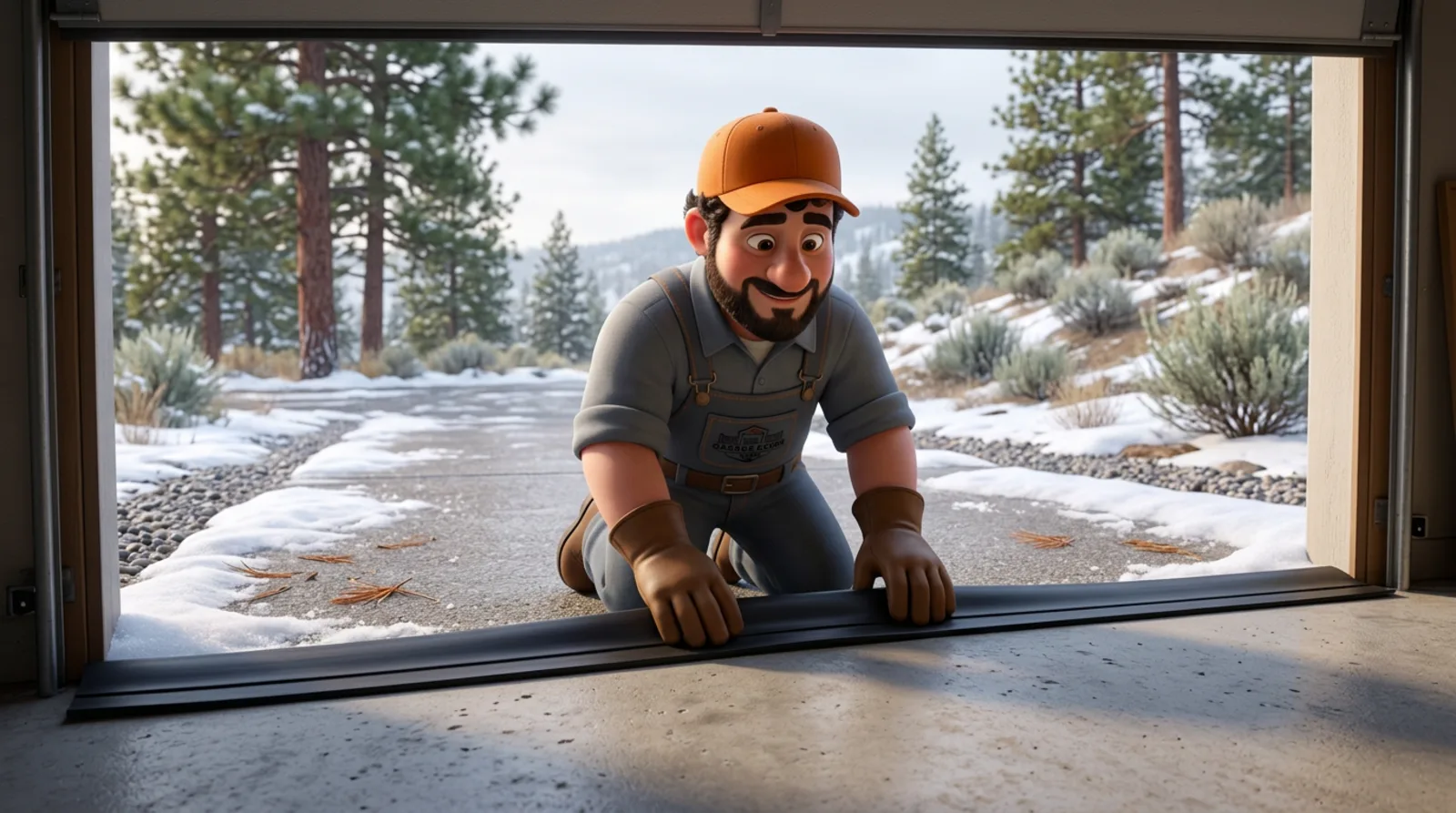
A threshold seal is a raised rubber strip glued to the garage floor under the closed door. The door’s bottom seal presses onto it, closing the gaps that a bottom seal alone can’t reach. You need one when the floor is uneven or sloped, the driveway runs toward the garage, water or snowmelt gets in under the door, or there are still gaps at the corners with a good bottom seal. It works together with the bottom seal, not instead of it, and it lasts longest when installed on clean, dry concrete in dry weather.
Threshold seal vs. bottom seal
| Bottom seal | Threshold seal | |
|---|---|---|
| Where it goes | Attached to the bottom of the door | Glued to the floor under the door |
| What it does | Cushions the door and seals against the floor | Raises a barrier the bottom seal presses onto |
| Best at | Normal gaps on a flat floor | Uneven floors, sloped driveways, water and snowmelt |
| Wear | Replaced when cracked or flattened | Replaced when torn or when the ends lift |
On a flat floor, a healthy bottom seal usually does the job on its own. A threshold seal earns its place when the floor or the driveway works against you.
When a threshold seal helps
- Uneven or settled concrete. Dips or cracks in the slab leave gaps no bottom seal can fill.
- Driveways that slope toward the garage. Rain and snowmelt run straight under the door.
- Corner gaps. Light shows at one or both corners even with a new bottom seal.
- Drafts in an attached garage. Cold air under the door chills the garage and the rooms beside it.
- Leaves, dust, and pests. A raised strip keeps debris and mice out.
- Doors that freeze to the floor. Keeping water out of the door line means less ice to bond the seal.
Choosing a threshold seal
- Height. Match the strip to the gap you need to close. A taller strip seals bigger gaps but is more noticeable underfoot.
- Profile. Sloped sides let vehicles roll over smoothly; a flat top gives the bottom seal a good surface to press on.
- Material. Rubber stays flexible in deep cold; cheaper vinyl can stiffen and crack in winter.
- Width. Choose a strip long enough for the full opening so you don’t need joints in the middle.
How to install one so it lasts
- Close the door and mark a line on the floor where the bottom seal meets it.
- Position the strip so the bottom seal lands on top of it, usually with the strip just inside the door line so water is stopped outside.
- Clean thoroughly. Sweep, wash off oil and dirt, and let the concrete dry completely.
- Cut to length for the full width of the opening.
- Glue it down with the adhesive the maker recommends, pressing firmly along the whole length.
- Weigh it down and let it cure fully before driving over it.
- Check the door closes evenly onto the strip and the opener doesn’t reverse; adjust the close limit if needed.
Adhesive needs dry concrete and temperatures above its minimum to bond, so install in fall before the hard freezes, not in the middle of winter.
Common mistakes
- Gluing to dirty or damp concrete. The strip peels within weeks. Clean, degrease, and let it dry fully.
- Installing in the cold. Most adhesives need a minimum temperature to cure; fall is better than January.
- Putting it in the wrong spot. If the strip sits outside the door line, water pools behind it instead of being stopped.
- Choosing a strip that’s too tall. The door can’t close fully and the opener reverses. Measure the gap first.
- Ignoring a worn bottom seal. A threshold strip can’t fix a bottom seal that is cracked or flattened.
- Letting the ends lift. Re-glue lifted ends right away before water gets underneath.
Looking after it
Sweep grit off the strip so the bottom seal sits flat on it, clear snow away from it rather than plowing over it, and check the ends each fall. A seal that has torn or flattened is inexpensive to replace and works best when the bottom seal is replaced at the same time.
Don’t forget the rest of the seal
A threshold seal only works if the bottom seal pressing on it is in good shape, and the side and top seals close the rest of the perimeter. Our guide to weather-sealing your garage door before the first frost covers the full set of seals.
Threshold seals in Merritt
Merritt sees dry, dusty summers and cold, snowy winters, and the threshold takes a beating in both. In summer, fine dust and grit blow in under the door; in winter, snowmelt and slush run in, then freeze along the door line overnight. Many properties around the Nicola Valley also have long or sloped driveways and older slabs that have settled over the years, leaving gaps that a bottom seal alone can’t close.
A threshold seal fitted in the fall, along with a fresh bottom seal and a check of the side seals, keeps dust out in summer and water out in winter. Garage door winterization in Merritt covers seals and lubrication before the cold sets in, and a maintenance visit in Merritt includes a full seal inspection. If dust is the bigger issue, our guide to clearing dust and grit from your tracks covers the summer side.
Get the gaps closed
Seeing daylight, dust, or water under your garage door? , call (778) 910-3106, or . A technician will check the bottom seal, measure the gaps, and fit a threshold seal if it’s the right fix for your floor.
Frequently Asked Questions
What is a garage door threshold seal?
A threshold seal is a raised rubber or vinyl strip that is glued to the garage floor right under the closed door. The door's bottom seal presses down onto it, closing gaps, blocking water and snowmelt from running in, and cutting drafts.
Do I need a threshold seal if I already have a bottom seal?
Not always. A good bottom seal is enough on a flat floor. A threshold seal helps when the floor is uneven or sloped, when the driveway runs toward the garage, or when gaps remain at the corners even with a new bottom seal. The two work together.
Will a threshold seal get in the way when I drive over it?
Most threshold seals are low and have sloped sides, so vehicles roll over them easily. Choose a height that fits the gap you need to close; taller strips seal bigger gaps but are more noticeable underfoot and under tires.
How long does a garage door threshold seal last?
A well-installed seal on clean, dry concrete can last several years. Snowplows, studded tires, de-icing salt, and poor adhesion shorten its life. Ends that start to lift should be re-glued before water gets underneath.
How do I install a garage door threshold seal?
Close the door and mark where the bottom seal meets the floor. Clean and dry the concrete thoroughly, cut the strip to length, apply the adhesive recommended by the maker, press the strip in place, weigh it down, and let it cure fully before driving over it. Install in dry weather above the adhesive's minimum temperature.
Does a threshold seal help with heating an attached garage?
Yes. Gaps under the door are a major source of cold air. Closing them with a good bottom seal and a threshold seal makes an attached garage noticeably warmer and helps the rooms next to it.